


Why F&B Businesses Need More Than Just CCTV: Lessons from Kopi TUKU
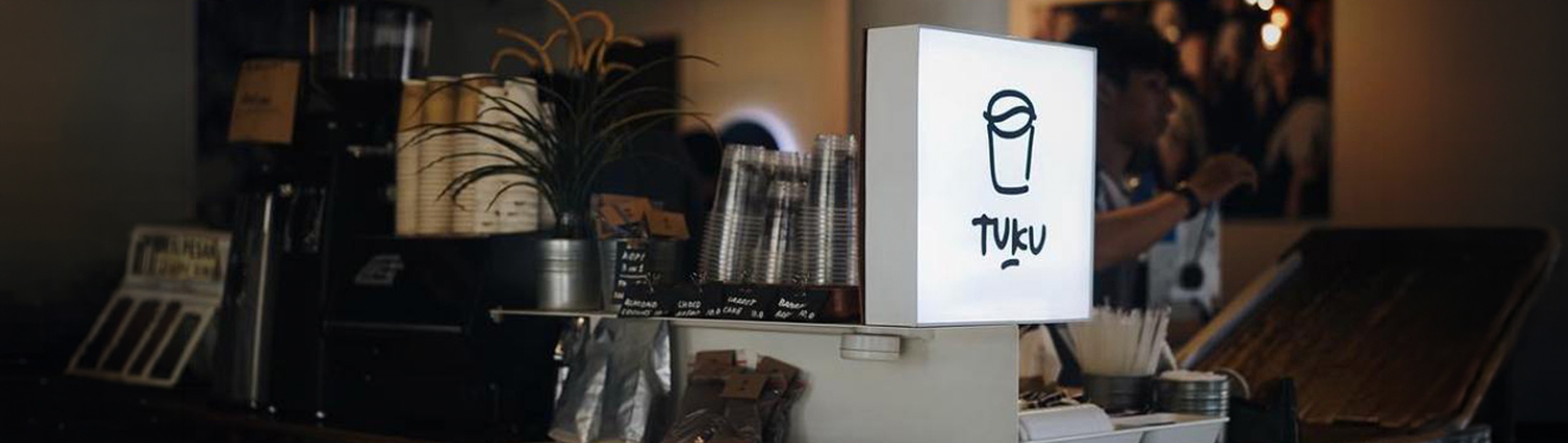
There is a question that runs through the head of nearly every coffee shop or restaurant owner after closing time: "Is everything actually safe until tomorrow morning?"
It looks like a simple question. But for anyone managing an F&B business across multiple branches, that question can sit on your chest the entire night.
A similar story comes from Jerry, a supervisor at Kopi TUKU — the culinary brand from Cipete that has now grown into many branches across Greater Jakarta and other cities. In a testimonial with SECOM, Jerry shared how he finally started sleeping better after moving away from the protection model he had relied on for years. See the whole interview here
The Challenge F&B Owners Tend to Underestimate
When a business has only one or two branches, most owners rely on CCTV alone. It is affordable, easy to install, and feels like enough. The problems start when branches multiply, operating hours stretch longer, and the team spreads across multiple locations.
CCTV, at its core, only records. It cannot call the police when a door is forced open at 2 AM. It cannot tell the difference between a sound in the kitchen that came from a technician nobody remembered to inform versus someone who should not be there at all.
For Jerry, this was the point where the worry started building up. Not because any of his branches had been broken into, but because he realized one thing: the system he had been using all this time only worked after something had already happened.
What Actually Separates CCTV From Smart Security
The short version: CCTV records, smart security responds. CCTV captures video for review later. Smart security detects, sends a real-time signal to a control center, and triggers a physical response when needed — all 24 hours a day, without the owner having to stay glued to a monitor.
The differences become clear when you compare them across the dimensions that actually matter for a business owner. Traditional CCTV exists to record video. Smart security combines detection, alerts, and response in one system. CCTV monitoring depends on the owner manually checking footage; smart security is monitored 24/7 by a dedicated team. CCTV has no built-in emergency response capability; smart security includes a physical response team on call. CCTV notifications only happen if the owner actively checks; smart security pushes real-time alerts to your phone the moment something is detected. Sensor integration is limited in CCTV setups; smart security ties together door sensors, motion detectors, smoke alarms, and panic buttons into a single system.
Smart security exists to close the time gap between "something happened" and "someone knows and is acting on it." That gap, in a traditional CCTV setup, often runs into hours.
How SECOM Smart Security Actually Works
SECOM Smart Security operates on a straightforward logic that breaks down into three steps.
The first step is emergency detection. Sensors installed at doors, windows, and critical areas detect unusual activity. The signal is sent immediately to the SECOM cloud system, where it triggers the next phase of response.
The second step is 24/7 monitoring. The SECOM Control Center team receives the alert and contacts the business owner to verify what is happening. If the threat is real, they coordinate directly with the police or fire department, depending on the nature of the incident.
The third step is physical response. If the threat is confirmed, a SECOM response team is dispatched to the location for direct on-site verification, with real-time reporting back to the owner throughout the process.
This is where the system genuinely differs from a CCTV setup. It is not just a piece of equipment mounted on a wall. It is a complete chain of action from the moment something is detected to the moment trained personnel arrive at the scene.
The Components That Matter for an F&B Security System
For F&B or retail businesses, the ideal configuration usually combines several core components, each playing a specific role in the overall system.
The control panel is the brain of the operation. It connects every sensor to the SECOM team and routes signals to the right place when something triggers. Door contacts detect when a door or window is opened outside operating hours — the most common point of unauthorized entry. Indoor PIR cameras both trigger an alarm and capture an image when motion is detected, giving the response team visual context before they arrive. Smoke detectors handle the early detection of smoke, which is critical for F&B kitchens running gas stoves and electrical equipment for long hours every day. Panic buttons give staff a way to call for emergency help silently when a situation feels threatening. Siren boxes produce a high-pressure alarm sound when a threat is confirmed, both deterring intruders and alerting anyone nearby. Smart video cameras provide live view access from a smartphone app, so the owner can check any branch from anywhere at any time.
Each configuration can be adjusted to the scale of the business. A small branch might only need the essential package, while a flagship store with a large warehouse area typically requires additional protective layers.
Why This Combination Fits Coffee Shops and Multi-Branch Businesses
A business like Kopi TUKU has a profile that differs significantly from other industries, and that profile shapes what kind of security system actually fits.
The first factor is the inventory left behind after closing. Premium espresso machines, raw material stock, point-of-sale terminals — all of it stays at the location overnight, every night. The second factor is the structure of multi-branch operations under one management team. It is simply not possible for an owner to manually monitor every branch every night across multiple cities. The third factor is staff turnover. F&B businesses typically have higher employee rotation than other industries, which means access to back-of-house areas needs to be managed with discipline rather than left informal. The fourth factor is fire risk. Kitchens run hot equipment for hours every day, and that level of exposure puts F&B businesses at higher fire risk than most retail operations.
Smart security addresses all four of these in one integrated system. Through the SECOM Smart Security app, an owner can monitor multiple branches from a single screen, receive immediate notifications when something looks off, and have a team ready to respond physically to the location when a threat is confirmed.
For Jerry, this is what finally turned the nightly worry into a different kind of feeling. Not the absence of risk, but the presence of a system that handles risk before it becomes his problem.
The Right Place to Start Is a Conversation
Every F&B business has a different layout, different operational flow, and a different risk profile. That is why the recommendation for an ideal security system can never be one-size-fits-all.
If you find yourself in the same place Jerry was — sensing that CCTV alone is not enough, but unsure what kind of solution actually fits — the first step is not buying a product. It is having a conversation.
SECOM provides free consultations for business owners. The team will assess your location, walk through your operational flow, identify the critical areas that need attention, and then recommend a package suited to the scale and specific needs of your business.
Jerry's story is not really a story about technology. It is a story about trading nighttime worry for actual sleep. For any business owner, that kind of return is hard to put a price on.