


Office Security Alarm Services: What Actually Protects Your Workplace After Hours
Most offices in Jakarta already have an alarm. The trouble is, most of those alarms stop at the siren — and a siren going off in an empty office at 2 a.m. doesn't stop anything.
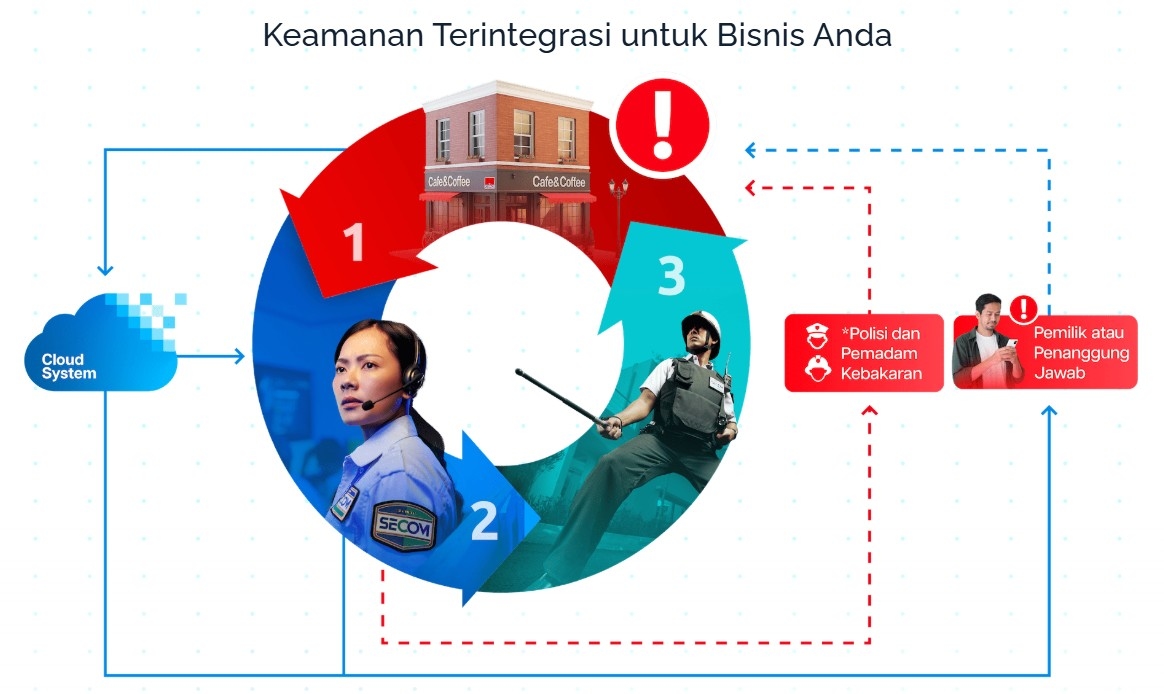
That is the gap between office security alarm services done properly and a box of sensors on the wall. A real alarm system is not a device; it is a chain of decisions: detection → verification → notification → response. Every link has to connect to a monitoring centre that is awake 24 hours a day, and a response team that can actually reach the building.
This article explains what you are really buying when you hire a professional office security alarm service. The components that belong in the system. The standards a credible vendor will quote without flinching. And the criteria to use when you choose the provider whose system keeps working when nobody is in the office.
What "Office Security Alarm Services" Actually Means
Office security alarm services are a B2B offering that combines alarm hardware with an ongoing operational service. The scope is much wider than mounting sensors on doors and windows.
A complete service usually covers:
Site survey and risk assessment — entry points, evacuation routes, critical zones such as server rooms and safes
System design based on the specific risk profile, not a copy-paste template
Installation of the hardware: sensors, control panel, communicator, integration with CCTV and access control
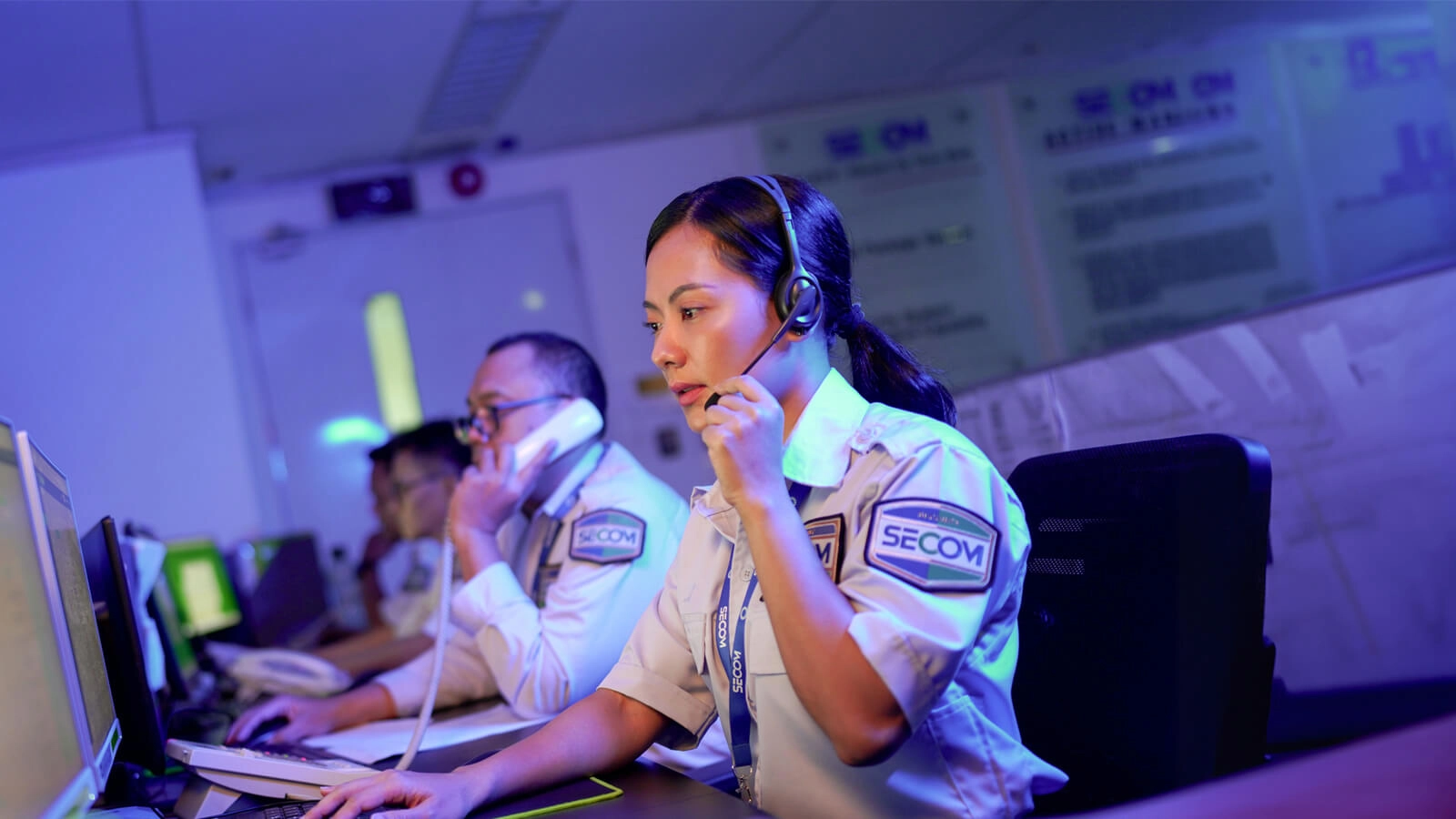
24/7 monitoring from a control centre owned and operated by the vendor
Patrol response to the site when an alarm is verified
Routine maintenance and sensor calibration
Incident reporting for internal audit and insurance purposes
The piece cheaper vendors skip over: without 24/7 monitoring and a response team, most of that chain disappears. You still have an alarm — it just rings to nobody, in an empty building.
Three Things That Separate a Real Office Alarm from a Retail One
Before the technical components, it helps to be clear about what makes a system worth calling "professional" in an office context.
1. A Staffed Monitoring Centre, Not a Phone Notification
Home alarms usually send a push notification to the owner's phone. That is not enough for an office. The owner might be asleep, abroad, or have their phone on silent. A professional system connects to a Control Centre staffed by human operators 24 hours a day, who verify the event through CCTV, audio, or a callback, then escalate.
2. A Physical Response Team
Sirens and notifications do not stop a burglary. The thing that stops it is a person arriving at the site. A professional vendor maintains patrol vehicles and trained personnel who can be dispatched to the office address once the alarm is verified as a real threat. At SECOM Indonesia, this team is core to the Man-Machine philosophy — the machine detects, the human responds.
3. A Service Contract, Not a One-Off Sale
Sensors age. Batteries die. Software needs updates. A vendor who installs and disappears leaves you with a system that looks alive but is no longer properly calibrated. Serious providers sell ongoing service with a written SLA — not a single installation followed by silence.
The Core Components of an Office Alarm System
A complete office alarm system is layered. You do not need every layer — the selection depends on your risk profile, the size of the office, and the kind of assets being protected.
Intrusion Sensors
These detect movement, door or window openings, and glass breaks outside of operating hours.
Motion sensors using PIR (Passive Infrared) or dual-tech (PIR plus microwave) to cut down false alarms
Magnetic contacts on main doors, server rooms, and document storage
Glass break detectors for areas with large glass walls or windows
Vibration sensors on safes and filing cabinets
Fire Detection
For offices in multi-storey buildings, fire alarm is not optional — it is a regulatory requirement.
Smoke detectors (photoelectric or ionisation)
Heat detectors for pantries and server rooms
Manual call points along evacuation routes
A control panel that connects to the building management system (BMS) where required
Office fire alarm systems should follow NFPA 72 (National Fire Alarm and Signaling Code) as the international reference, and SNI 03-3985-2000 as the Indonesian standard. Ask your vendor about both before you sign anything.
Emergency Buttons: Panic, Duress, and Holdup
Often forgotten, but critical for offices that handle cash, sensitive documents, or walk-in visitors.
Panic button — at the reception desk and management offices, sending a silent signal to the control centre
Duress alarm — a covert code used when staff are forced under threat, such as a PIN that looks normal but transmits an alarm
Holdup alarm — for robbery scenarios; silent on-site so the perpetrator is not provoked
Environmental Monitoring
For offices with servers, labs, or temperature-sensitive assets:
Temperature and humidity sensors in server rooms
Water leak detection in utility areas
Power outage monitoring
Control Panel and Communicator
This is the brain of the system. The question often missed: how does the panel talk to the monitoring centre?
A system that relies on a single line — phone or internet alone — can be defeated by cutting that line. The current industry standard is a dual-path communicator — IP as primary, cellular as backup. If the internet cable is cut, the system still transmits over the mobile network. Ask the vendor about this directly; it is a quiet point of failure in cheaper installations.
Integration with CCTV and Access Control
Modern office alarm systems rarely stand alone. CCTV integration lets the control centre operator verify an alarm visually before dispatching a team — fewer false dispatches, faster real ones. Access control integration enables automation such as a lock-down on every door when an alarm is active.
How an Office Alarm System Works With a 24/7 Monitoring Centre
Here is the typical flow when a sensor triggers at a SECOM client's office at 2.30 a.m.:
Detection — A PIR sensor in the lobby picks up movement. The signal is sent to the control panel.
Transmission — The panel sends the alarm via dual-path (IP plus cellular) to the Control Centre.
Reception — A Control Centre operator receives the signal, with the address, the sensor zone, and the alarm type.
Verification — The operator checks the CCTV feed, calls back the office PIC, and compares the event to the false-alarm history. Verification takes 30 to 90 seconds.
Dispatch — Once verified, the nearest SECOM patrol team is sent to the site. At the same time, the operator notifies the local police and the company's PIC.
On-site response — The patrol team arrives, runs an exterior check, coordinates with police if needed, and secures the location.
Documentation — Every step is logged with a timestamp, for the client's morning report and for insurance or audit purposes.
What makes the flow work is that every node is run by a trained person, not a blind algorithm. That is also why a false alarm at home is a small inconvenience, while a false alarm at a professional office account needs to be handled with operational discipline.
Standards and Regulations You Should Ask Your Vendor About
Here is a fast way to filter vendors: ask about standards and licences. A serious vendor will answer specifically. A vendor who just installs boxes will deflect the question and pivot to price.
Seven Questions to Ask Before You Sign a Contract
Instead of opening with "how much does it cost", start with these. The answers will tell you who is serious and who is not.
1. Do you own and operate your monitoring centre, or do you outsource it? A vendor with their own control centre has full control over operator quality, training, and SLA performance. Outsourcing removes a layer of accountability.
2. What is the target response time for your patrol team to reach my site after an alarm is verified? A serious answer is specific to your area — for example, "an average of 12 to 18 minutes for the SCBD district" — not a vague reassurance.
3. How many active client sites are you currently monitoring? Scale matters. A vendor with 100 sites runs differently from one with 10,000. The larger operations tend to have better redundancy, mature procedures, and more flight hours behind their team.
4. How does the system work during a power outage? The correct answer: the control panel has a battery backup of at least 24 hours, the cellular communicator stays online, and the monitoring centre receives an automatic power-loss notification.
5. Does the system use a dual-path communicator? Covered earlier. If the answer is "no need" or "a phone line is enough", look elsewhere.
6. What is your SLA in writing, and what happens if you miss it? A professional vendor will put the SLA into the contract, not just promise it. That includes monitoring centre uptime, response time, maintenance frequency, and penalty clauses.
7. How do you handle repeated false alarms? A good vendor has a process to diagnose and eliminate false alarms — not just disable the offending zone. Ask about calibration, sensitivity tuning, and PIC training.
Investment: What Actually Drives the Cost of Office Alarm Services
The cost of office security alarm services varies widely because it depends on too many factors to be meaningful as a flat number. Instead of giving a misleading figure, here is what moves the price.
Office size and complexity — the count of doors, windows, and rooms that need coverage
Risk level — offices holding cash, sensitive data, or high-value assets need a higher grade
System integration — alarm alone, or integrated with CCTV and access control
Service scope — installation only, or installation plus 24/7 monitoring and patrol response
SLA terms — tighter response times cost more
Location — coverage areas with stricter response targets may require specific staffing
Common commercial models in the industry:
CAPEX — buy the hardware upfront, pay monthly maintenance
OPEX / Subscription — hardware bundled into a monthly fee, no large upfront spend
Hybrid — a mix, often chosen by mid-sized offices
SECOM Indonesia runs most services on a subscription model, which keeps costs predictable and sits inside monthly OPEX — useful for companies that want to avoid a large capital outlay at the start.
Why SECOM Indonesia: Heritage, Philosophy, and Scale
SECOM was founded in Japan in 1962 as that country's first professional security services company. In Indonesia, PT SECOM Indopratama has been operating for more than 30 years, serving corporate offices, financial institutions, industrial facilities, and foreign embassies.
What sets SECOM apart from a typical alarm vendor is the Man-Machine philosophy — the belief that security cannot be handed over entirely to technology, nor entirely to people. Sensors detect with a precision humans cannot match. Humans read context and respond with judgement sensors cannot match. SECOM's alarm systems are designed with the integration of both as a first principle, not an afterthought.
At the heart of the service is Anshin — a Japanese word for the deep calm of knowing something is well looked after. Anshin is not a marketing slogan; it is an internal standard, measured through consistent service, predictable response times, and transparent communication.
SECOM Indonesia's office security alarm services include:
Risk assessment and system design by certified engineers
Installation with premium-brand hardware and dual-path communicators as standard
24/7 monitoring from the SECOM Control Centre in Jakarta
Patrol response teams with operational vehicles across Greater Jakarta and major cities
Scheduled maintenance under a written SLA
Incident reporting for internal audit, insurance, and compliance
FAQ: Common Questions About Office Security Alarms
Does a professional office alarm connect directly to the police?
Not automatically. The alarm signal goes to the vendor's Control Centre first, where an operator verifies it before notifying the local police. This avoids false dispatches that would otherwise tie up police resources. The vendor's own patrol team usually arrives first to secure the site.
How long does installation take for a mid-sized office?
For an office of 500 to 1500 m² with a standard system, installation typically takes 3 to 7 working days, depending on cabling complexity and BMS integration. Add another 1 to 2 weeks for risk assessment and system design before installation begins.
What happens if the office internet goes down?
A professional system uses a dual-path communicator — when IP fails, the panel switches automatically to the cellular network and continues sending signals to the Control Centre. The panel also has a battery backup, so it keeps working through a power outage.
Can an office alarm system be integrated with what we already have?
Usually, yes. Integration with existing CCTV, access control, and building management systems (BMS) is common. The site assessment will determine compatibility. For offices in managed buildings, coordination with the building management team is required for some integration types.
How do you handle frequent false alarms?
False alarms usually have an identifiable cause: an oversensitive sensor, a poor placement (such as a PIR pointing at an AC vent), or inconsistent arming and disarming by staff. A professional vendor will run a root-cause analysis, recalibrate the sensors, and train the office PIC — not just shut off the troublesome zone.
What is the difference between a DIY alarm and a professional service?
A DIY alarm produces a siren or a phone notification. No verification. No physical response. No audit trail. For a house, that is often enough. For an office — especially one holding valuable assets, sensitive data, or under compliance audit — it falls short of the minimum standard.
Does an alarm system reduce insurance premiums?
Many insurers offer premium discounts for properties protected by 24/7 monitoring under a BUJP-licensed provider. The discount varies, usually 5 to 15 percent of the annual premium. Ask your broker, citing the vendor's system specification.
What contract term is typical?
For subscription models, contracts usually run 2 to 3 years with a renewal option. The period gives both sides enough time to calibrate the system, fine-tune internal procedures, and measure a real return on investment.
Next Step: Office Alarm Consultation for Your Business
The right office alarm system comes out of understanding the specific risks of your business — not from a packaged offer that looks the same for every client. SECOM Indonesia's engineering team runs a free site assessment for offices in Greater Jakarta and major Indonesian cities, producing a system design based on your asset profile, operating hours, and building structure.