


Logistics Security: Key Risks, Standards, and How to Protect Your Supply Chain
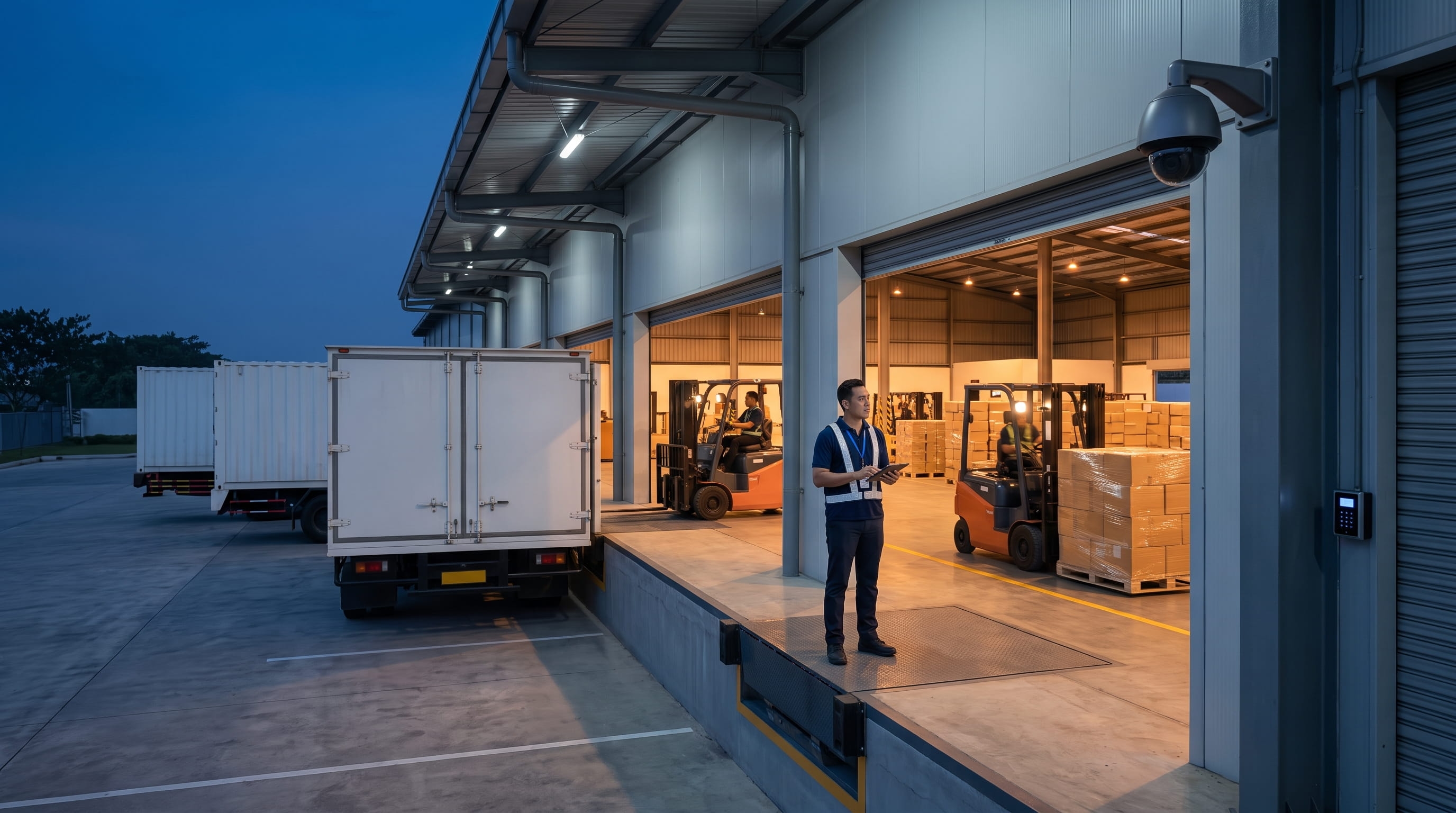
For operations and supply chain managers, a security incident can quickly affect more than financial performance. Theft, damaged goods, system disruption, or delivery delays can put client commitments, service levels, and business continuity at risk.
The challenge is growing as logistics networks become faster and more complex. Warehouses, loading docks, transportation routes, vehicle fleets, and digital management systems all create potential points of exposure.
A practical logistics security strategy therefore needs to protect physical assets, transportation activities, and information systems at the same time.
This guide explains the main logistics security risks companies should consider, how supply chain security can be improved, and how standards such as ISO 28000 can support a more structured security program.
What Is Logistics Security?
Logistics security refers to the policies, systems, people, and procedures used to protect goods, facilities, transportation assets, and operational data throughout the supply chain.
Its purpose is to reduce exposure to risks such as theft, cargo loss, unauthorized access, operational damage, and cyber incidents.
In most logistics operations, security can be divided into three main areas:
Physical security, including warehouses, loading docks, storage areas, and entry points.
Transportation security, covering vehicles, cargo movements, delivery routes, and fleet activities.
Information security, including Warehouse Management Systems (WMS), inventory data, delivery information, and customer records.
These areas are closely connected.
A warehouse may have extensive CCTV coverage, but its operations can still be disrupted if someone gains unauthorized access to the WMS. Likewise, strong cybersecurity controls cannot prevent physical theft if warehouse access is poorly managed.
For this reason, logistics security should be treated as one coordinated system rather than a collection of separate security measures.
Why Supply Chain Security Matters
Every logistics operation depends on timing, visibility, and control.
When one part of the supply chain is disrupted, the impact can spread quickly. A cargo theft incident may cause a delivery delay. A damaged shipment may result in a client complaint or replacement cost. A compromised WMS may affect inventory accuracy across several locations.
For businesses operating large warehouses, distribution centers, or transportation fleets, security becomes part of day-to-day operational risk management.
The goal is not only to prevent incidents, but also to detect problems earlier and respond before they create wider operational disruption.
Main Logistics Security Risks
Several security risks commonly affect warehouse, distribution, and transportation operations.
1. Cargo Theft and Pilferage
Cargo theft remains one of the most direct threats to logistics operations.
The 2025 Cargo Theft Report from TT Club and BSI Consulting identified India, Indonesia, China, Bangladesh, and Vietnam among the Asian countries with high reported cargo theft activity.
Around half of reported incidents occurred at warehouses and production facilities.
Globally, trucks represented the main target and accounted for approximately 70% of reported incidents. The same report also found that around 22% of cargo theft cases involved some level of insider participation.
These figures show why warehouse security cannot focus only on external threats. Internal access, employee movement, loading activities, and third-party personnel should also be included in security planning.
2. Goods Damage During Handling and Storage
Not every logistics loss is caused by theft.
Goods can also be damaged because of improper handling, poor loading procedures, unsuitable storage conditions, or insufficient supervision during loading and unloading.
The challenge is that damage may not always be discovered immediately.
In some cases, the problem only becomes visible after the shipment arrives at its destination. This can make it difficult to identify where the damage occurred and who was responsible.
Monitoring procedures around loading docks, storage areas, and goods movement can help operations teams investigate incidents more accurately.
3. Cyber Threats to Warehouse Management Systems
Modern warehouses depend heavily on digital systems.
A Warehouse Management System may contain:
inventory records;
stock locations;
inbound and outbound schedules;
shipment information;
supplier data;
customer information.
If unauthorized users gain access to these systems, they may be able to manipulate inventory data, interfere with delivery schedules, or access sensitive information.
For companies operating in Indonesia, personal information stored in logistics systems may also fall under Law No. 27 of 2022 on Personal Data Protection, commonly referred to as the PDP Law.
This makes WMS security relevant not only to operational continuity, but also to data protection responsibilities.
4. Route Deviation and Cargo Loss in Transit
Once goods leave the warehouse, security risks move with them.
Vehicles may experience route deviations, delays, unauthorized stops, theft, or other incidents during transportation.
Without real-time visibility, operations teams may only discover the issue after a driver reports it or a shipment fails to arrive as scheduled.
GPS-based fleet monitoring can help identify unusual vehicle movements earlier.
5. Maritime Security Risks
Maritime security is another important concern for logistics companies operating in Indonesia.
Reported piracy incidents increased by 85% during the first half of 2025.
This is particularly relevant for businesses that depend on domestic shipping routes or major regional shipping corridors such as the Strait of Malacca.
For companies with multimodal supply chains, security planning should therefore consider both land and maritime transportation exposure.
How to Improve Logistics Security
Improving supply chain security does not require every risk to be addressed with the same tool.
Different parts of the operation require different controls, but those controls should work together.
1. Strengthen Warehouse Security with CCTV
CCTV remains one of the most important tools for warehouse security, but camera placement matters.
Priority areas typically include:
loading docks;
warehouse entrances and exits;
high-value storage areas;
vehicle access points;
employee access areas;
goods receiving and dispatch zones.
Analytical CCTV can also help detect unusual movement or activity without requiring staff to watch every camera continuously.
Video records can support both real-time monitoring and post-incident investigation.
2. Use Access Control for Sensitive Areas
Not every employee or contractor needs access to every part of a warehouse.
Access control systems can restrict entry to sensitive areas based on role or authorization.
For example, access can be limited for:
high-value inventory storage;
control rooms;
server rooms;
restricted loading areas;
stock handling zones.
Access records can also provide useful information when companies investigate unauthorized entry or inventory discrepancies.
3. Monitor Fleet Movement in Real Time
GPS-based fleet management allows operations teams to track vehicle locations throughout the delivery process.
The system can help identify:
unexpected route changes;
unusual stops;
prolonged vehicle inactivity;
delays;
vehicles entering or leaving designated areas.
This gives operations teams more visibility during transportation and can reduce the time needed to respond when something unusual occurs.
4. Protect Warehouse Management Systems
Physical and digital security should be managed together.
Companies using WMS platforms should review who has access to inventory, shipping, and customer information.
Basic controls can include:
role-based system access;
regular access reviews;
network segmentation;
account activity monitoring;
strong authentication policies;
system logs;
periodic cybersecurity assessments.
These measures help reduce the risk of unauthorized changes to operational data.
5. Build Clear Incident Response Procedures
Security systems are more useful when teams know what to do after an alert.
Companies should define clear procedures for incidents such as:
unauthorized entry;
suspicious warehouse activity;
cargo theft;
route deviation;
damaged shipments;
system access anomalies.
Each procedure should identify who receives the alert, who investigates it, and when the incident needs to be escalated.
ISO 28000 and Supply Chain Security Management
Companies looking for a structured approach to supply chain security can refer to ISO 28000.
ISO 28000 provides requirements for a security management system that organizations can use to identify risks, establish controls, monitor security performance, and improve supply chain security procedures.
The framework can apply to areas such as:
security risk assessment;
access control;
physical protection;
security responsibilities;
contractor and vendor management;
incident management;
security monitoring.
Companies should also make sure they are referring to the current edition of the standard.
ISO 28000:2007 was officially withdrawn on March 15, 2022 and replaced by ISO 28000:2022.
The newer version provides a broader security management framework that organizations can apply across their operational environments.
Businesses that still reference ISO 28000:2007 in internal policies, vendor requirements, or security documents should review those references and update them where necessary.
Logistics Security Risks and Recommended Controls
Security Risk | Common Vulnerability | Relevant Security Measures |
|---|---|---|
Cargo theft and pilferage | Warehouses, loading docks, transportation routes | CCTV analytics, access control, trained security personnel |
Goods damaged during handling | Loading, unloading, and storage areas | Supervision procedures, CCTV records, goods condition tracking |
WMS manipulation or cyberattack | Inventory and delivery systems | Network segmentation, access audits, account monitoring |
Route deviation or cargo loss | Delivery fleets | GPS tracking, real-time fleet monitoring |
Unauthorized warehouse access | Sensitive storage and operational areas | Access control, identity verification, visitor management |
Delayed response to incidents | Warehouses and other operational sites | 24/7 alarm monitoring and defined response procedures |
Integrated Logistics Security from SECOM Indonesia
Different logistics risks often require different forms of protection.
SECOM Indonesia uses a Man-Machine approach that combines trained security personnel with monitoring and security technology.
The purpose is to address situations where technology alone may not provide enough context and where personnel alone may not be able to monitor every area continuously.
For logistics and warehouse environments, SECOM's security services can include:
Professional Security Personnel
Security officers can support physical access control, patrol activities, visitor management, and incident response.
SECOM security personnel are prepared through SECOM's training facilities and managed together with SECOM Bhayangkara.
CCTV and Video Monitoring
CCTV systems can be positioned around areas such as loading docks, storage zones, entrances, and other high-risk locations.
Analytical video functions can also help identify unusual activity and support security teams during monitoring.
Access Control Systems
Access control can restrict entry into selected warehouse areas and create records of who enters specific locations.
This is particularly useful for warehouses containing sensitive or high-value inventory.
24/7 Alarm Monitoring
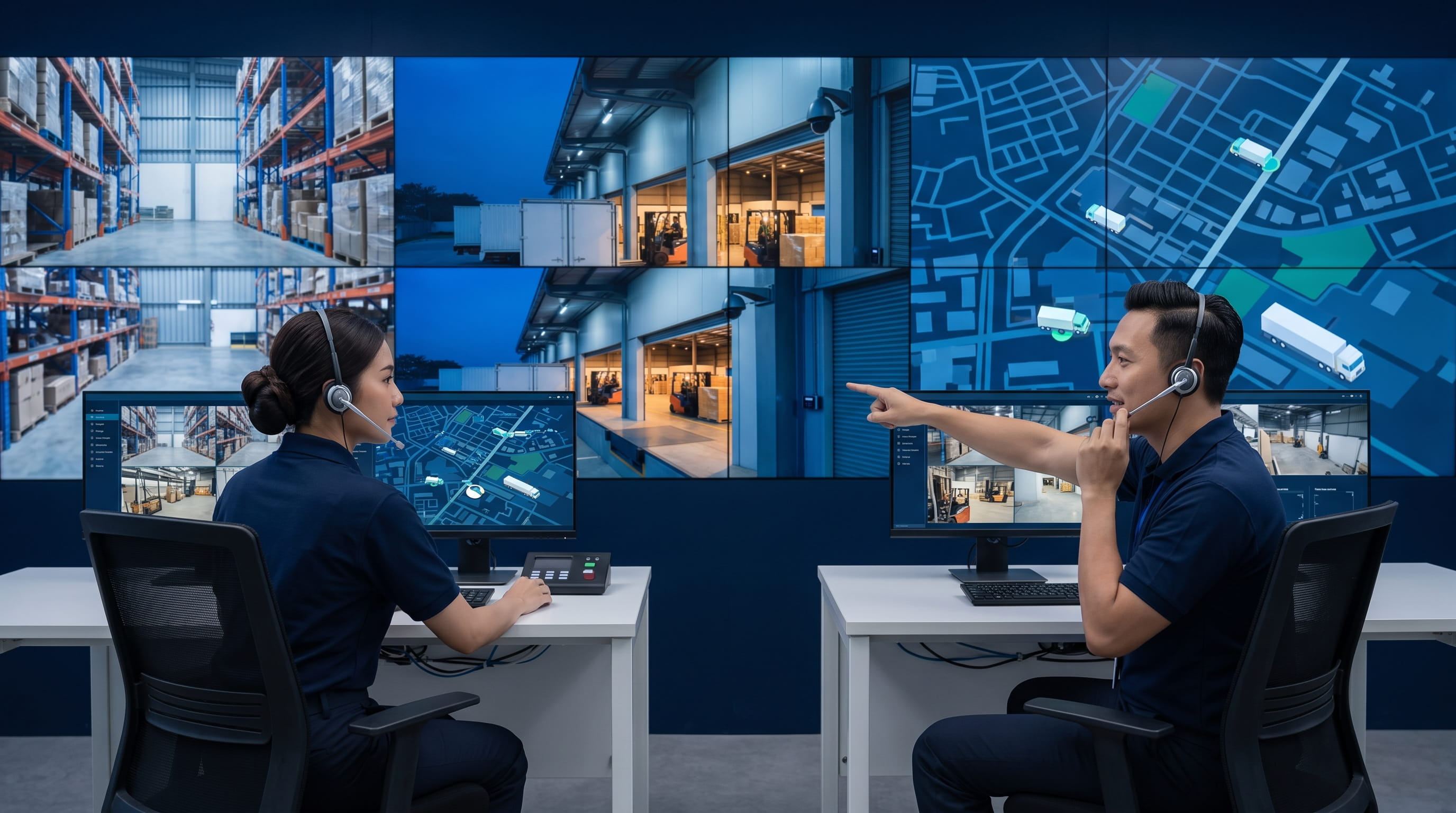
SECOM's Control Center provides continuous alarm monitoring.
When the security system detects an abnormal condition or generates an alert, the event can be reviewed and handled according to the agreed response procedure.
A Physical Response Team may also be dispatched when required.
Building a More Secure Logistics Operation
Effective logistics security depends on visibility across the entire operation.
Warehouse cameras, access systems, fleet monitoring, cybersecurity controls, and security personnel each address different risks. Their value increases when information and response procedures are coordinated.
For operations managers, the practical objective is straightforward: reduce blind spots, identify incidents earlier, and make sure the right team can respond when something happens.
SECOM Indonesia has provided security services in Indonesia for more than 30 years, supporting businesses that need physical security, monitoring systems, and operational response across their facilities.