


Flood Prevention Devices: 14 Flood Barriers for Homes and Buildings, and How to Choose One
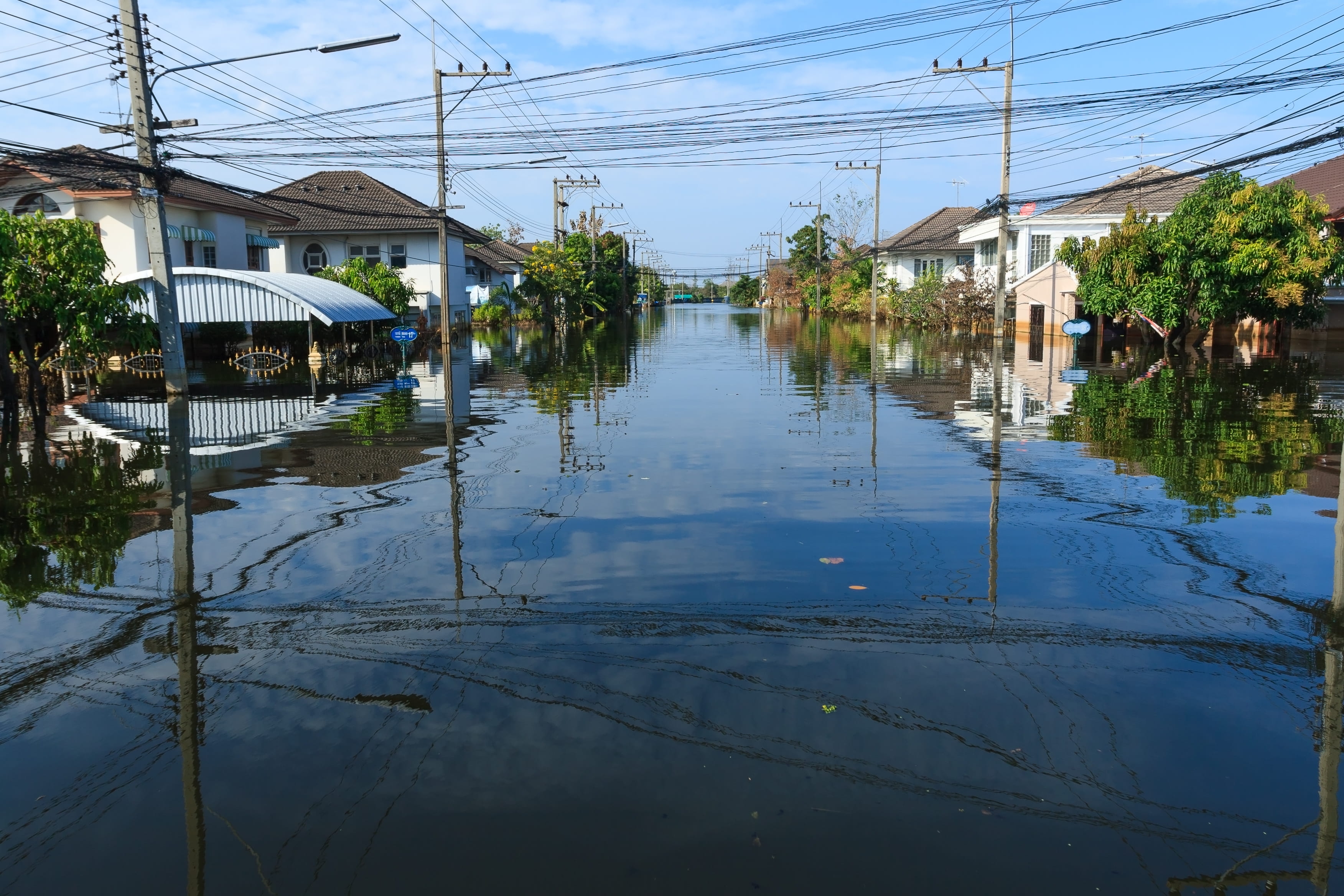
By the SECOM Indonesia Team. Updated 12 October 2026.
Short answer: Flood prevention devices fall into two groups. For homes and buildings, there are flood barriers fitted where water gets in: sandbags, water-absorbing bags (SAP), portable L-shaped flood barriers, aluminum flood gates, water-filled tube barriers, rubber water seals, vent covers, backflow valves, submersible pumps, and flood sensors. At neighborhood and city scale, there are levees and sluice gates, polder systems with pumping stations, retention ponds and infiltration wells, and early warning systems.
This year, the window to prepare is shorter. Indonesia's Meteorology, Climatology and Geophysics Agency (BMKG) predicts a late start to the 2026/2027 rainy season in 529 seasonal zones, or 61.08 percent of the country, with most areas only entering the rainy season between November and December 2026. The peak follows soon after: December 2026 in 155 seasonal zones (36.94 percent of Indonesia's land area), January 2027 in 162 zones, and February 2027 in 190 zones. Ardhasena Sopaheluwakan, BMKG's Deputy for Climatology, warned that with the start and the peak so close together, rainfall could spike suddenly and trigger floods and landslides.
Last year's numbers aren't reassuring either. Between 1 January and 17 December 2025, the National Disaster Management Agency (BNPB) recorded 3,116 disasters in Indonesia, and floods topped the list with 1,584 events. More than half.
Below, each device is covered by how it works, when it fits, and when it doesn't.
Where does flood water get into a building?
The front door is only one way in. Before buying anything, check the routes common to landed houses, shophouses (ruko), and warehouses:
Front, side, and garage doors with low thresholds or thresholds level with the street.
Gaps under door leaves and around frame joints.
Drains: bathroom floor drains, toilets, and kitchen drains. When the city drainage system is full, water can push back up through these openings.
Low vents, cable holes, and cracks in walls.
Flood barriers work by closing those routes. Miss one, and even the best barrier at the front door won't help much.
10 flood barriers and devices for homes and buildings
1. Sandbags
The oldest method, and the easiest to find. Bags are filled about two-thirds with sand, then stacked in a staggered pattern, like bricks, in front of a door or along a fence. A plastic sheet on the side facing the water cuts down seepage between the bags.
The weaknesses only show up in an emergency. A single filled bag weighs well over ten kilograms. Filling them takes sand, a shovel, and several people. Once the water recedes, the wet bags leave sand and mud that has to be cleared out. And honestly, how many households keep a pile of sand around when a downpour hits at 2 a.m.?
2. Water-Absorbing Bags (Sandless Sandbags)
This is the replacement for sandbags. The bags contain Super Absorbent Polymer (SAP), a material that can absorb hundreds of times its dry weight in water and turn into a gel. In storage, the bags are thin and light. Once they touch water, they swell within minutes and their weight climbs close to that of a sandbag, which makes them stable enough to hold back flow at a doorway or a drain opening.
Speed is the main advantage: no sand, no shovel, and one person can do it. One caveat rarely gets mentioned. SAP absorbs less when the water contains salt, so for tidal flooding (banjir rob) in coastal areas, check that the product specs state how it performs in brackish water, or pair it with a physical barrier.
3. Portable L-Shaped Flood Barriers
L-shaped panels made of ABS or PVC plastic. The base faces the oncoming water, so the higher the water rises, the harder it presses the panel onto the floor. The modules link together to match the width of an opening and can be reused many times.
There's one condition: the floor has to be level. On uneven paving blocks or cracked asphalt, water can still slip underneath.
4. Flood Gates (Flat Barriers / Stop Logs)
Stacking boards of aluminum alloy with waterproof rubber seals, slotted into permanent rails on both sides of a door frame or gate. Manual versions go in by hand; automatic versions rise on their own, triggered by a sensor or by the water's buoyancy.
For places that flood deeply every year, this is the sturdiest option. The trade-off: the rails have to be drilled into the wall around the frame, each set is custom-sized for its opening, and it costs the most of anything on this list.
5. Water-Filled or Inflatable Tube Barriers
Long rubber or PVC tubes filled with water or air until rigid, then laid out as a temporary levee. They suit wide spans such as warehouse gates, factory yards, or parking areas. Setup needs a pump to fill them and takes longer than water-absorbing bags.
6. Rubber Water Seals (Water Stoppers)
Rubber or silicone strips stuck along door thresholds, under bathroom doors, or around sink edges to close gaps and stop minor seepage. Cheap and easy to fit, but not designed for water that's already ankle-deep.
7. Vent and Wall Opening Covers
Plates or temporary covers for low vents, cable holes, and pipes that pass through walls. They look trivial. Yet these are exactly the openings people forget once the front door is sealed tight.
8. Backflow Valves (Check Valves)
A one-way valve on a drainpipe or floor drain. Water from inside the house can still flow out, but water from the city drains can't come back up. When murky water bubbles out of a bathroom drain even though the door is already blocked off, it usually came this way. Have a plumber fit it, since it involves the pipework.
9. Submersible Pumps (Sump Pumps)
A submersible pump placed at the lowest point, such as a basement or an inspection pit, to pump out water that has already gotten in. Models with a float switch turn on by themselves as the water rises.
Watch the electrics. Floods often arrive with power cuts, and submerged wiring is dangerous for anyone in the house. Mount the pump's power outlet above the highest flood level the property has seen, make sure there's an earth leakage circuit breaker (ELCB), and keep the generator somewhere dry if the pump has to run through a blackout.
10. Flood Sensors (Water Leak Sensors / Flood Alarms)
Small sensors on the floor that sound an alarm or send a phone notification when water starts touching the floor. They don't hold back any water at all. What they give you is time: you find out early, so you can set up barriers, move belongings, or switch off the power before the water rises. They're most useful in homes that are often empty, warehouses, and server rooms.
4 types of flood prevention infrastructure at area scale
These are usually built and run by local governments, housing developers, or industrial estate managers. Of the four, homeowners can usually build only infiltration wells and biopore holes themselves.
Levees and sluice gates. Levees hold back overflowing rivers or the sea, while sluice gates control the flow. Jakarta residents know the Katulampa Weir in Bogor because its water level is the benchmark for floodwater heading down the Ciliwung River.
Polder systems and pumping stations. Low-lying areas below the surrounding water level are ringed with levees, and the water inside is pumped out. The Pluit Polder in North Jakarta is one of the best-known examples.
Retention ponds, infiltration wells, and biopore holes. All three hold or soak up rainwater so it doesn't hit the city drains all at once.
Early warning systems (EWS). Water level sensors on rivers and weirs that feed data to the regional disaster management agencies (BPBD) and to residents. At home, you can follow weather warnings through BMKG's official channels.
Flood barriers for homes compared
Device | How it works | Best for | Installation | Notes |
|---|---|---|---|---|
Sandbags | Hold water back by the weight of the stack | Emergencies, short spans | Manual; needs sand and labor | Heavy, leave mud behind |
Water-absorbing bags (SAP) | Absorb water and swell into a barrier | Fast response at doors, drains, vents | Place them and let them absorb | Absorb less in salt water |
L-shaped flood barriers | Water pressure presses the panel onto the floor | Doors and garages with level floors | No drilling, modular | Uneven floors may leak |
Aluminum flood gates | Watertight boards in permanent rails | Sites that flood deeply every year | Drilled rails, custom-made | Highest cost |
Water- or air-filled tube barriers | Rigid tubes form a temporary levee | Gates, yards, parking areas | Needs a filling pump | Slower to set up |
Rubber water seals | Close gaps | Minor seepage | Stick-on | Not for standing water |
Backflow valves | Stop water flowing back up from the drains | Floor drains, toilets, drainpipes | Fitted into the pipe | The route people forget |
Submersible pumps | Remove water that's already inside | Basements, inspection pits | Needs power or a generator | Mind electrical safety |
Flood sensors | Give early warning | Empty homes, warehouses, server rooms | Placed on the floor | Don't hold back water |
How to choose the right flood barrier
Start with four questions:
Where does the water get in? Walk around the house during the next heavy rain, or ask a neighbor who has lived there for years. Note every point: doors, gaps, drains, vents.
How high does the water usually get? Look for old waterlines on the fence, the outside walls, or a utility pole near the house. That line is more honest than anyone's memory.
How fast does the water come? If it usually rises within minutes of a downpour, pick something one person can set up without tools.
Where will you store it? Somewhere high and close to the door. A kit kept in a ground-floor storeroom often goes under before anyone can reach it.
Match your answers against this table.
Situation | A sensible combination |
|---|---|
Water seeps through gaps under doors or in the bathroom | Rubber water seals, plus water-absorbing bags at the seepage points |
Water from the street rises onto the terrace in heavy rain, then recedes within a few hours | Water-absorbing bags or an L-shaped barrier at the door, a backflow valve on the drain |
Water comes up through a floor drain or toilet | A backflow valve; water-absorbing bags at the drain opening as backup |
Deep flooding every rainy season | Permanent flood gates, a submersible pump, and an evacuation plan for belongings and people |
Building often left empty (second home, shophouse, warehouse) | Flood sensors, a ready-to-use barrier kit, and someone nearby who can set it up |
To be blunt: no home flood barrier is designed for major, fast-moving floods. Once the BPBD issues an evacuation notice, getting people out matters more than keeping water away from the door.

The Anti Flood Kit from SECOM: water-absorbing bags for fast response
For the second and third situations in the table (water that arrives fast and has to be dealt with in minutes), SECOM offers the Anti Flood Kit. It belongs to the water-absorbing bag category.
Each package contains 1 blue tarpaulin and 10 water-absorbing bags. Every bag uses Super Absorbent Polymer (SAP) and can absorb around 20 kg of water. Dry, the kit is compact enough to keep in a cabinet by the door rather than in a storeroom. When the rain gets heavy, place the bags where water comes in (a doorway, a drain opening, or a low vent), then let them absorb and swell.
Compared with sandbags, the difference shows in four ways:
No hunting for sand, shovels, or extra hands once the rain has started.
The bags absorb water and block it; sandbags only block it.
No sand or mud left behind after the water recedes.
They take up little storage space.
The kit can be used in homes, kiosks and shophouses, offices, schools, factories, and warehouses where the water's entry points are clear.
The Anti Flood Kit is designed to reduce the impact of standing water and minor flooding, not to remove flood risk entirely. In places that regularly flood deeply, it works best as the first layer of emergency response, alongside permanent measures such as flood gates and backflow valves.
At SECOM, we hold to the principle of anshin: peace of mind comes from preparing before something happens, not from scrambling once the water is at the door.
See the Anti Flood Kit from SECOM
Checklist before the rainy season peaks
Map every point where water gets in and photograph each one.
Clear gutters, the drain in front of the house, and inspection pits of trash and sediment.
Get your flood barriers ready and store them high up, near the door.
Move important documents, electronics, and power outlets above the highest flood level the property has seen.
Save your local BPBD emergency number and follow BMKG's early warnings.
For a step-by-step guide, read how to keep flood water out of homes and offices (in Bahasa Indonesia).
Frequently asked questions
What flood prevention devices are there for homes?
Sandbags, water-absorbing bags (SAP), portable L-shaped flood barriers, aluminum flood gates, water-filled tube barriers, rubber water seals, vent covers, backflow valves, submersible pumps, and flood sensors. The right choice depends on where water gets in and how high it rises at your property.
What is a more practical alternative to sandbags?
Water-absorbing bags filled with SAP, also called sandless sandbags. They're light when dry, swell on contact with water, and leave no mud behind. One example is the Anti Flood Kit from SECOM, where each bag absorbs around 20 kg of water.
How do water-absorbing bags work?
The SAP inside absorbs hundreds of times its dry weight in water and turns into a gel. The bag swells and gets heavier, so a stack of them can hold back water at the entry point.
Do water-absorbing bags work against tidal flooding?
They can help, but SAP absorbs less in salt or brackish water. For tidal flooding (banjir rob), check the product specs and consider pairing the bags with a physical barrier such as an L-shaped barrier or a flood gate.
Will a flood barrier guarantee my home stays dry?
No. Flood barriers reduce how much water gets in and buy time to save belongings. For major, fast-moving floods, follow the BPBD's evacuation instructions.
When is the best time to prepare flood barriers?
Before the rainy season. BMKG predicts most of Indonesia will enter the rainy season between November and December 2026, with the peak arriving in stages from December 2026 to February 2027.
Data sources
BMKG 2026/2027 rainy season forecast: Bisnis.com, 25 September 2026 and Metro TV, 22 September 2026 (in Bahasa Indonesia)
BNPB 2025 disaster recap: Kompas TV, 24 December 2025 (in Bahasa Indonesia)