


Industrial Park Security Services for Factories and Warehouses (2026)
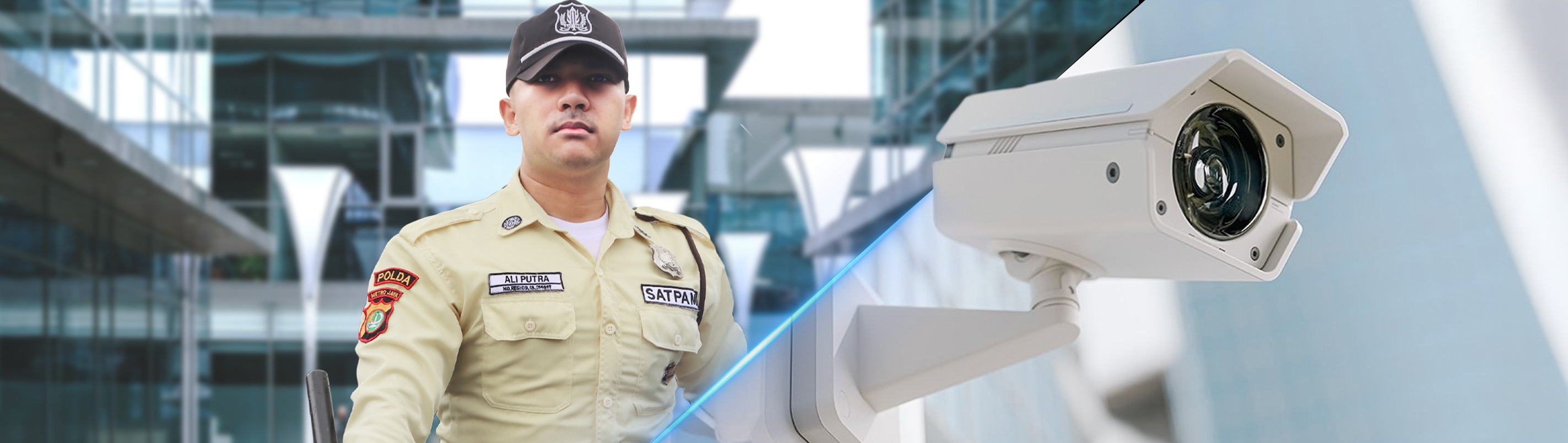
Industrial park security is a specialized service designed for factories, warehouses, and logistics sites. It fundamentally relies on two components: certified security guards from licensed Security Service Providers (BUJP) and technical systems—such as alarms, access control, CCTV, and 24/7 control center monitoring. In industrial parks, this setup operates on two distinct levels: park-wide security managed by the developer, and site-specific security managed by individual tenants.
This two-layered approach is exactly what gets overlooked most often during budget planning. The result is fairly predictable: certain areas end up falling through the cracks, covered by nobody's contract.
Park-Level vs. Site-Level Security
Park developers establish Industrial Park Regulations that dictate the rights and responsibilities of both the management and the industrial tenants. This framework covers park-level security: main gates, street patrols, street lighting, and occasionally guard posts at major intersections.
What the developer doesn't cover is everything inside your fence line. Your loading docks, employee parking lots, raw material warehouses, panel rooms, back doors, and any fences directly bordering empty lots or drainage canals are entirely up to you.
Consider the scale. According to a report by the Ministry of Industry (presented by the Director General of Resilience, Territorial, and International Industrial Access, Tri Supondy, to the House of Representatives on June 29, 2026), Indonesia has 179 industrial parks covering over 101,350 hectares, housing 11,970 tenants and 2.35 million workers. Do the math: an average park spans about 566 hectares and houses nearly 67 tenants. A single park patrol team simply isn't designed to monitor the back fences of 67 different factories at once.
Six License Categories (and Why They Matter)
There are six specific types of business activities a BUJP can legally operate: security consulting, security equipment implementation, security training, cash and valuables transit, security personnel provision, and K-9 security services.
Here is the crucial detail: an Operational License (SIO) is only valid for one specific business area and one location. Registration is now handled through the National Police’s Binmas Online System (BOS), which is integrated with OSS. Licenses are valid for one year for new applicants and two years for renewals. The police conduct field audits, and the BUJP is required to submit regular reports.
This has immediate consequences when you are reviewing procurement bids. A vendor licensed solely to provide security guards is not legally authorized to install security equipment. So, if a proposal promises security guards plus alarm and access control installation all in one package, it is perfectly fair to ask: which license covers which part, and is the rest being subcontracted out?
Calculating Needs Instead of Guessing
The old-school approach to security is estimating based on land area or the number of shifts. A much more accurate method is counting your actual access points.
Start by listing them: main gates, truck entrances, loading docks, employee doors, emergency exits, parking areas, server rooms, chemical storage, and any fence segment touching an empty lot, river, or drainage canal. You then evaluate each point based on two criteria: does it require human judgment, and does it require a constant presence?
Points requiring judgment need a human. Checking delivery documents, stopping unregistered vehicles, de-escalating situations, or taking charge when a fire alarm goes off—those actions require evaluation, not just observation.
Points needing constant presence are cheaper to monitor with sensors. You cannot realistically have someone guard a 400-meter back fence for eight hours straight, nor do you need to.
This is where access control audit trails become invaluable. Every time a door opens, the system logs who, when, and where. When an investigation happens, those logs cut days of detective work down to just a few minutes.
Where SECOM Fits In
SECOM Co., Ltd. was founded in Tokyo on July 7, 1962, as Japan's first security service company. Four years later, in 1966, SECOM launched SP Alarm—Japan's first online security system—with a bank branch in Ikebukuro as its first client. The name SECOM itself, used as a brand since 1973, stands for "security and communication," built on the idea of combining human expertise with science. In Indonesia, this is known as the "Man-Machine" concept.
SECOM has been operating in Indonesia since 1994, and its role division strictly follows the licensing structure mentioned earlier.
SECOM Bhayangkara handles the human element. This unit provides certified security guards for factories, warehouses, and commercial facilities, backed by a training center in Ciawi, Bogor. Its operational office is strategically located inside the KIIC Industrial Park in Karawang.
SECOM Indonesia handles the systems side, offering a true total security solution: consulting and design, alarms, access control, CCTV, X-ray baggage scanners, metal detectors, pedestrian gates, parking systems, key management, right down to 24/7 control center monitoring connected to a physical response team. All these devices are designed to work together as a single ecosystem, rather than a collection of separately purchased hardware.
Combining both closes the most expensive gap in security: the time delay between an incident happening and someone responding to it.
If you want to start with a site survey, the SECOM team can walk through your facility with you first, long before any numbers are put on the table.
Frequently Asked Questions
What exactly is industrial park security? It is a specialized security service for factories, warehouses, and logistics parks that combines certified guards from a licensed BUJP with technical systems like alarms, access control, CCTV, and 24/7 monitoring.
My factory is in an industrial park that already has security. Do I still need my own? Yes. The park management only secures public areas like main gates and internal roads according to park regulations. Everything inside your property line—including loading docks, employee parking, and back fences—remains the tenant's responsibility.
What is the minimum training duration for a security guard? The mandatory basic training, Gada Pratama, requires a minimum of 232 training hours, as per National Police Regulation (Perpol) No. 4 of 2020. Without this certificate, a person is not legally allowed to hold a Police-issued Security Guard ID (KTA Satpam).
Can a single vendor provide guards and install my alarms and access control? Yes, as long as the vendor holds valid licenses for both specific areas. Guard provision and security equipment installation are two distinct business categories for a BUJP, and licenses are strictly issued per category and per location. Always ask to see the license numbers for each.
How do I verify if a BUJP is legally registered? Cross-check their company data between their Business Identification Number (NIB) on the OSS system and the Police's BOS system. Check the expiration date of their Operational License (SIO), and verify their active membership in a police-recognized security association.
What is the difference between SECOM Bhayangkara and SECOM Indonesia? SECOM Bhayangkara provides the security personnel and operates a training center in Ciawi, Bogor. SECOM Indonesia manages the technical systems and monitoring: consulting, alarms, access control, CCTV, screening devices, and the 24/7 control center. Both entities can work together to design a unified security plan for a single site.