


Industrial Estate Security Solutions: A System to Protect Assets, Operations, and People
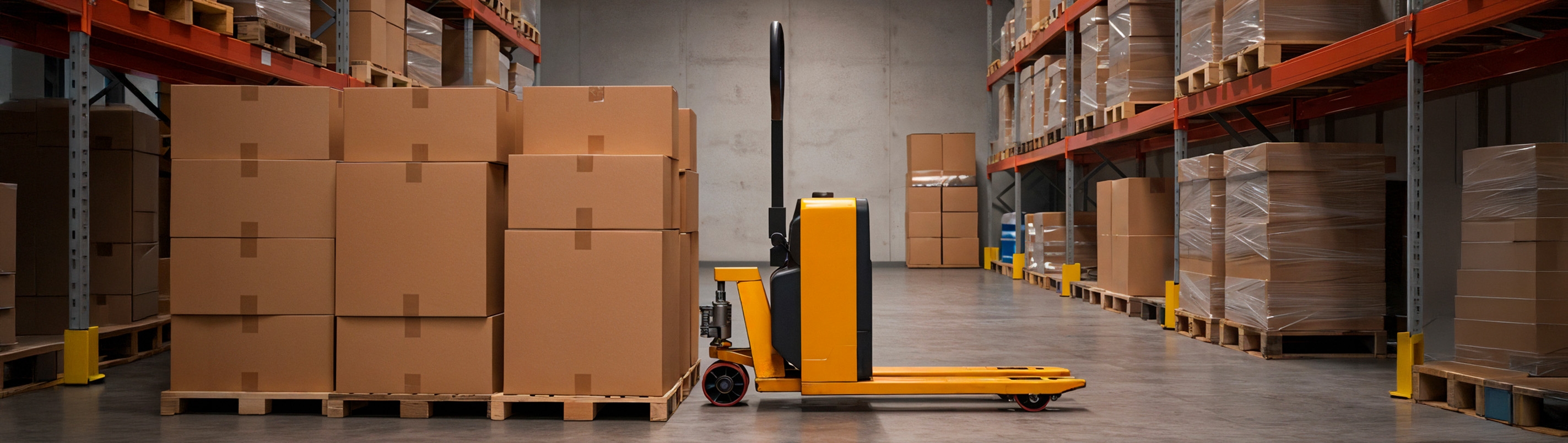
Effective industrial estate security is a layered system that brings together four things: physical perimeter defense, an integrated electronic system (CCTV, alarms, and access control), a monitoring center running 24 hours a day, and emergency protocols for fire and medical incidents. One layer alone isn't enough. Fences and guard posts can be breached the moment attention slips; CCTV with nobody watching it only helps after something has already happened. The real strength of an industrial security system lies in how the layers close each other's gaps.
This is the approach SECOM Indonesia takes. Since SECOM built Japan's first connected security system in 1966, the model has stayed the same: on-site sensors and cameras link to a control center watched by people around the clock. For industrial estates — factories, warehousing, logistics parks — this model closes the gap between "something's wrong" and "someone is responding."
What are industrial estate security solutions?
Industrial estate security solutions are a combination of technology, procedures, and personnel built specifically to protect large-scale production, storage, and logistics areas. Unlike office building security, industrial estates have three traits that demand a different approach: a large footprint with many access points, high-value assets (raw materials, machinery, finished goods), and heavy logistics traffic moving in and out every day.
That's why a generic solution doesn't work. A pharmaceutical warehouse needs temperature control and biometric access to storage. A chemical plant needs early fire detection and hazard-zone segmentation. A distribution center needs surveillance at loading docks and verification of outgoing vehicles. One thing stays constant across all of them: each needs the ability to spot trouble early, then respond fast.

Why does an industrial estate need a layered approach?
Because threats to an industrial estate come from several directions at once, and no single tool can hold them all back. Theft of raw materials by an insider is handled differently from an outside breach. A fire in the production area is different again from a data leak in the operational systems. A layered system works on a realistic assumption: one layer will fail at some point, and the layer behind it has to catch what slips through.
Here's how the layers cover each other in practice. Someone gets over the fence (the physical layer fails). An AI camera detects movement in a restricted zone and sends an alert to the monitoring center (the surveillance layer catches it). An operator verifies it through the live feed, then dispatches a response team while locking down access to sensitive areas remotely (the control and response layers do their job). Without the second and third layers, that breach at the fence wouldn't be discovered until the next morning.
The cost of a gap like this isn't just about stolen goods. A production line that halts after an incident can cost far more than the value of whatever was taken. That's why industrial security is now treated as part of operational continuity, not just a line item of expense.
The five layers of an industrial estate security system
A complete industrial estate security system has five layers: physical perimeter, integrated CCTV, access control, a 24-hour monitoring center, and emergency detection. Here's what each one does and how they work together.
1. Perimeter and physical security
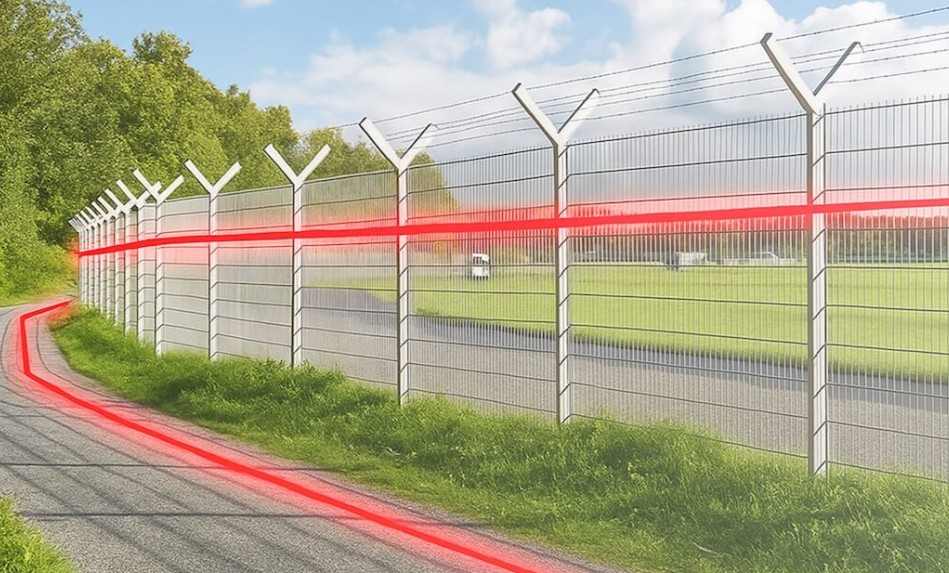
The first layer is built to prevent and slow down unauthorized access before it reaches the core area. It includes fencing with climb- or cut-detection sensors, automatic barrier gates at the main entrance, bollards to stop vehicles ramming through, and guard posts staffed by trained personnel. For estates with a long perimeter, sensors along the fence line work better than relying on patrols alone, because patrols leave a time gap between one round and the next.
Layered checks at the gate also belong here: employee identity verification, visitor registration, and inspection of logistics vehicles. This is where technology like X-Ray and baggage scanners comes in for estates with strict inspection needs, such as sites holding high-value goods or regulated materials.
2. Integrated AI-based CCTV system
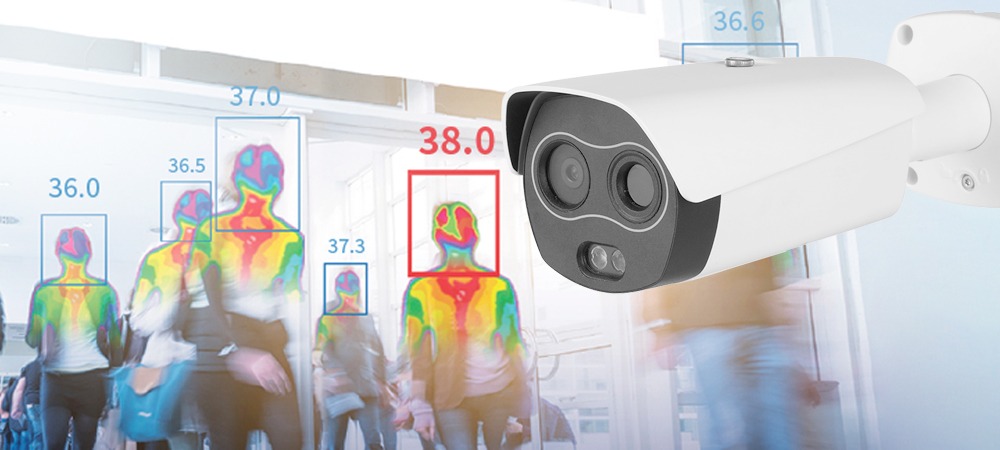
Modern industrial CCTV is no longer just a recorder — its job has shifted to active detection. AI-based cameras can read license plates, detect movement in restricted zones, flag a person entering an area without protective equipment, and send automatic alerts the moment an anomaly appears. The difference from passive CCTV is large: passive footage only helps when you replay it after the fact, while an active system tells you while the event is still happening.
The key word is "integrated." Standalone cameras in each area are of little use if an operator has to stare at dozens of separate screens. A good system pulls every feed into one platform, then filters out the noise so only the events that matter reach the operator. That's what separates a plain camera install from a real surveillance solution.
3. Access control and access management
Access control governs who can go where, and when. For an industrial estate, that means dividing the area into zones with different sensitivity levels — public areas, production floors, server rooms, chemical storage — and granting access rights by role. The technology can be RFID cards, biometric scanning (fingerprint or face), or a combination of both for the most sensitive areas.
A benefit of access control that gets underrated is the audit trail. Every time someone opens a door, the system logs who, when, and where. When an incident happens — say, material goes missing from storage — these records narrow the investigation from hundreds of employees down to the handful who actually had access to that room at the time.
4. 24-hour monitoring and command center
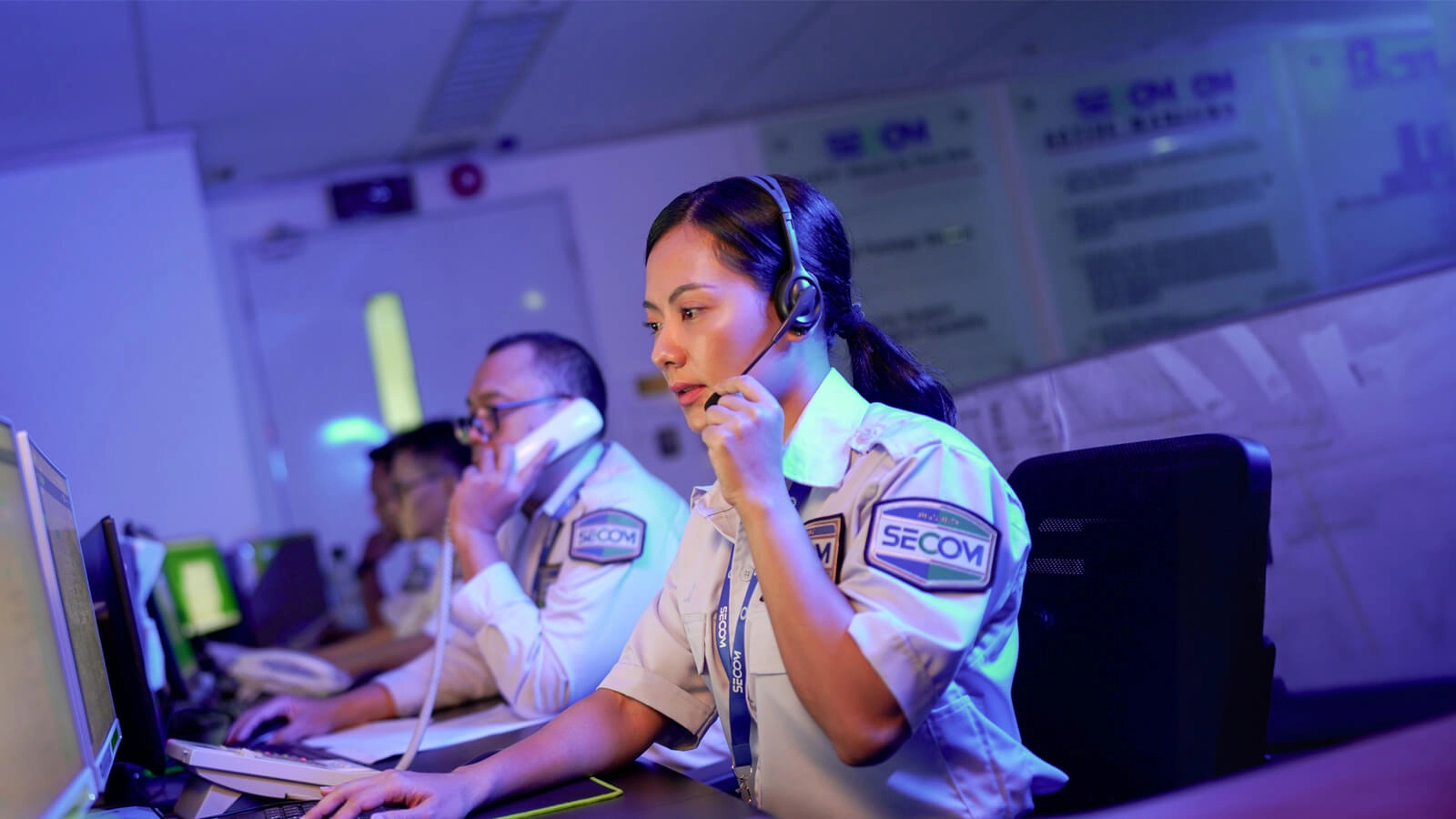
This is the layer most often missing from an ordinary security install, and also the one that matters most. All those sensors, cameras, and alarms mean nothing if no one is watching and ready to respond when an alarm goes off at three in the morning. The monitoring center is where every signal from the site collects, gets watched by trained operators around the clock, and gets acted on with a real response.
This is where the SECOM model is rooted. The concept of a central control center watching many sites at once is something SECOM pioneered in Japan back in 1966, long before "smart security" became a buzzword. For an industrial estate, having a monitoring center means every anomaly — a forced door, movement in a restricted zone, a fire alarm — reaches an operator who can verify it through the feed, contact on-site personnel, and dispatch a response team. The gap between detection and action is usually where security systems fail, and that's exactly where a monitoring center earns its keep.
5. Fire detection, emergency response, and cybersecurity
The fifth layer covers risks that don't come from theft. Early fire detection (fire alarms) matters in areas with flammable material, and ideally connects to the same monitoring center so the response doesn't depend on someone happening to notice smoke. Devices like an AED (Automated External Defibrillator) at strategic points add readiness for medical emergencies, given that industrial estates are often far from health facilities.
One dimension is growing in importance: cybersecurity. Modern security systems connect to the network, and an unprotected camera or access control unit can become an entry point for an attack. Protecting the physical system means protecting the network that controls it, too.
How do you choose an industrial estate security provider?
Choose a provider that can unite all the layers into one integrated system, not one that only sells loose equipment. Plenty of vendors sell CCTV, while another sells access control, and a third supplies the guards. The result is a patchwork system that doesn't talk to itself — and the gaps appear precisely in the seams between separately sourced components. A good provider designs the layers to work as a single whole.
A few criteria worth using when comparing providers. First, do they run their own monitoring center 24 hours a day, or do they just install the equipment and leave. Second, how fast and clear is their response mechanism when an alarm goes off. Third, their track record handling industrial-scale facilities — a factory's needs are very different from a shophouse's. Fourth, the ability to integrate existing systems with new ones, so earlier investment isn't wasted.
SECOM Indonesia meets these criteria through a combination of integrated technology (CCTV, alarms, access control, fire detection, X-Ray, AED), trained security personnel, and a monitoring center that watches client sites around the clock. With more than 30 years in Indonesia, the approach is rooted in the concept of anshin — a sense of calm that comes not from a promise, but from a system that genuinely responds when it's needed.
Frequently asked questions
How much do industrial estate security solutions cost? The cost depends on the size of the area, the number of access points, the type of technology installed, and whether it includes security personnel and monitoring services. The common approach is a security audit first, to map needs and weak points, then build a solution to fit the scale and budget.
What's the difference between ordinary CCTV and an integrated surveillance system? Ordinary CCTV records footage to review after an event. An integrated system unites cameras, sensors, and alarms into one active monitoring center, then alerts you while an anomaly is happening — not afterward. That time difference is what decides whether an incident can be prevented or only investigated.
Can a security system be installed without disrupting factory operations? Yes. Installation is usually scheduled in stages and fitted around operating hours, so the production line doesn't have to stop. Existing systems can also often be integrated with new ones without a full teardown.
Which security layer is most important for an industrial estate? No single layer is the most important — the strength is in the combination. But the layer most often skipped is the 24-hour monitoring center. Without someone watching and responding, even the most advanced equipment only works as a record of events, not a deterrent.
Can one provider handle both physical and technology security? Yes, and that's actually the ideal. A provider that handles security personnel along with the technology and monitoring as one whole removes the coordination gaps that appear when security is sourced from several separate parties.