


IP Camera vs CCTV: 6 Key Differences for Business Security
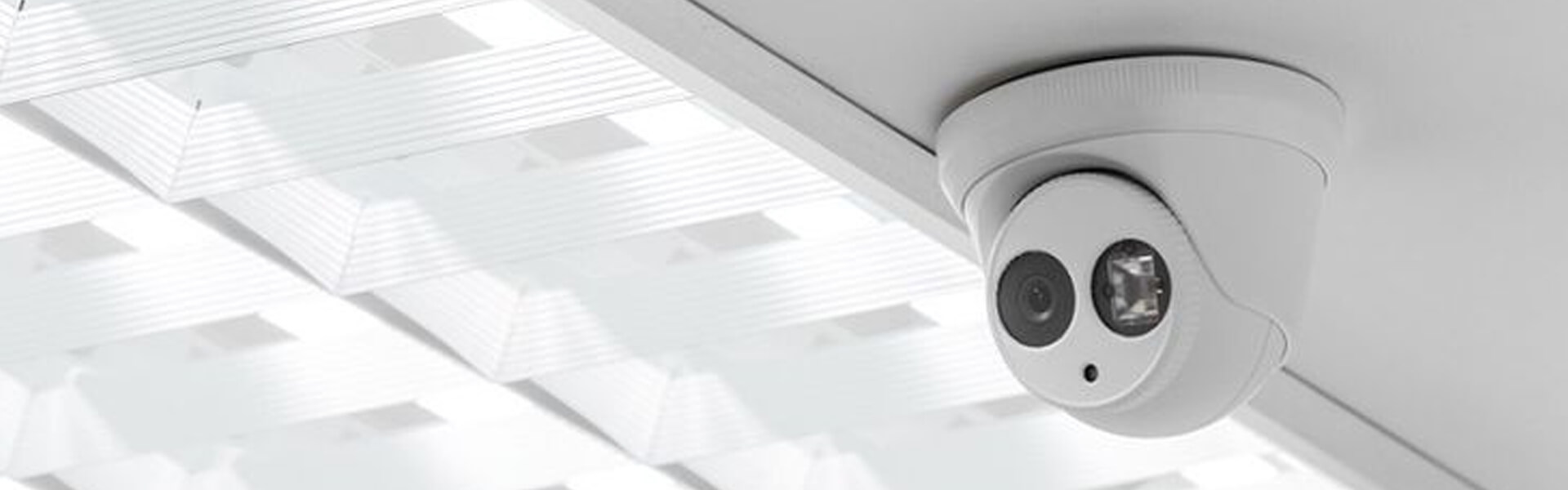
When evaluating a surveillance camera system for your office, factory, or commercial property, two terms will always come up: IP Camera and CCTV. Both function as security cameras — but how they work, the image quality they produce, and their integration capabilities are fundamentally different. Understanding the difference between IP cameras and CCTV isn't just technical knowledge. It's the foundation of a sound security investment decision.
What is CCTV? Definition and How It Works
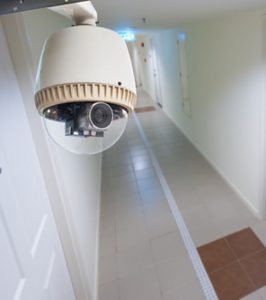
CCTV (Closed-Circuit Television) is a surveillance system that transmits video signals on a closed loop, meaning the signal can only be accessed by monitors or recording devices connected directly via coaxial cable. It doesn't connect to a public network.
Technically, CCTV works like this:
The camera captures images in analog format
The signal travels through coaxial cable to a DVR (Digital Video Recorder)
The DVR converts the analog signal to digital and stores it
Footage is displayed on a physically connected monitor
Analog CCTV has been in use for over four decades and still makes sense for basic needs on a tight budget. That said, its limitations in resolution and scalability are real factors worth thinking through carefully.
What is an IP Camera? Definition and How It Works
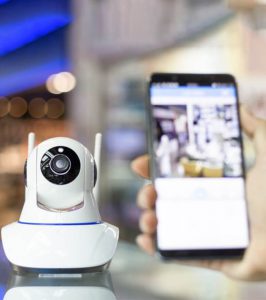
An IP Camera (Internet Protocol Camera) is a digital surveillance camera that sends and receives data over a computer network or the internet. Each camera has its own IP address, making it a standalone device that can be accessed, controlled, and monitored from anywhere in real time.
How IP cameras work:
The camera captures high-resolution images in digital format
Data is compressed and transmitted over a LAN or WiFi network
An NVR (Network Video Recorder) or cloud storage receives and stores the footage
Users access live feeds via an app, browser, or centralized management system
IP cameras are the technology behind the entire modern smart security ecosystem — including AI detection, intelligent video analytics, and integration with other security systems.
6 Key Differences Between IP Cameras and Analog CCTV
Image Quality and Resolution
This is the most obvious gap. Analog CCTV typically delivers images in the 480p–1080p range, depending on hardware quality. IP cameras start at 2 MP (Full HD) and go up to 12 MP and beyond — equivalent to 4K quality.
In a business security context, image quality isn't just about aesthetics. High-resolution footage makes it possible to identify faces, read vehicle license plates, and capture details of critical incidents that analog cameras simply can't pick up. For environments like banking, data centers, or high-value manufacturing, resolution is a safety factor — not a preference.
How Data Is Transmitted
Analog CCTV depends on coaxial cable: expensive to install, limited in range, and prone to signal interference. Each camera needs its own cable run directly to the DVR.
IP cameras use Ethernet cable or WiFi. The same cabling infrastructure already running your office network can support IP cameras — especially with PoE (Power over Ethernet) technology, where a single cable carries both data and power to the camera.
Scalability and Flexibility
A DVR for analog CCTV has a fixed channel count. Adding cameras means replacing the DVR or buying additional units, with all the physical cabling that comes with it.
IP cameras are far more scalable. Adding a new camera means connecting it to a network switch and registering it in the NVR or management system. There's no physical channel limit like a DVR — the system grows with your business.
Remote Monitoring Capability
Analog CCTV is a closed system by design. Remote access requires additional converter hardware and complex network configuration — it was never built for mobility.
IP cameras have native remote access. Security managers can monitor an entire facility from a smartphone, tablet, or laptop, anywhere and anytime. This matters especially for companies with multiple branches or 24-hour operations.
AI and Smart Analytics Integration
This is the most strategically important difference for modern businesses. IP cameras connected to a network can integrate with:
Intelligent motion detection that distinguishes between people, vehicles, and other objects
Facial recognition for attendance or identity verification
Crowd analytics for public facilities and retail spaces
Integration with access control and alarm systems
People counting for space capacity management
Analog CCTV can't support any of these functions without a full conversion to a digital system — which, at that point, eliminates whatever cost advantage it had to begin with.
Upfront Cost vs Total Cost of Ownership
Analog CCTV has a lower upfront installation cost. But when you factor in coaxial cabling, scalability limits, upgrade costs, and the absence of analytics capabilities, the total cost of ownership for IP cameras is often more competitive over the long run.
When to Choose Analog CCTV
Analog CCTV still makes sense in specific situations:
Existing coaxial infrastructure already in place
Very limited budget with no room for expansion
Locations with no internet or network access
Truly basic monitoring needs with no future upgrade plans
When to Choose IP Cameras
IP cameras are the better fit for most modern business scenarios:
Mid-to-large scale business facilities
Locations with many monitoring points
Real-time remote monitoring requirements
Integrated security system needs
Situations where detailed incident evidence matters
At SECOM Indonesia, the choice between IP cameras and CCTV isn't just a technical decision — it's part of a larger security strategy.
The Man-Machine philosophy at the core of SECOM's services positions technology not as a replacement for human security personnel, but as a force multiplier that allows trained officers to respond faster, more accurately, and more effectively.
Want to know the right camera configuration for your facility? Consult with SECOM — free of charge.