


Smart Home for Beginners: Where to Actually Start (And What Most People Get Wrong)

A home you can control from your phone sounds appealing. Turn on lights without getting out of bed. Check your security cameras from anywhere. Set the mood for movie night through a single app. It all feels convenient and modern.
But the moment you start researching, the excitement often turns into confusion. Too many options. Too many brands. Everything seems important. And you end up stuck, unsure where to begin.
This guide cuts through that noise. It breaks down the five main categories of smart home technology, explains which one deserves your money first, and flags the mistakes that trip up most first-time buyers.
What Is a Smart Home, Exactly?
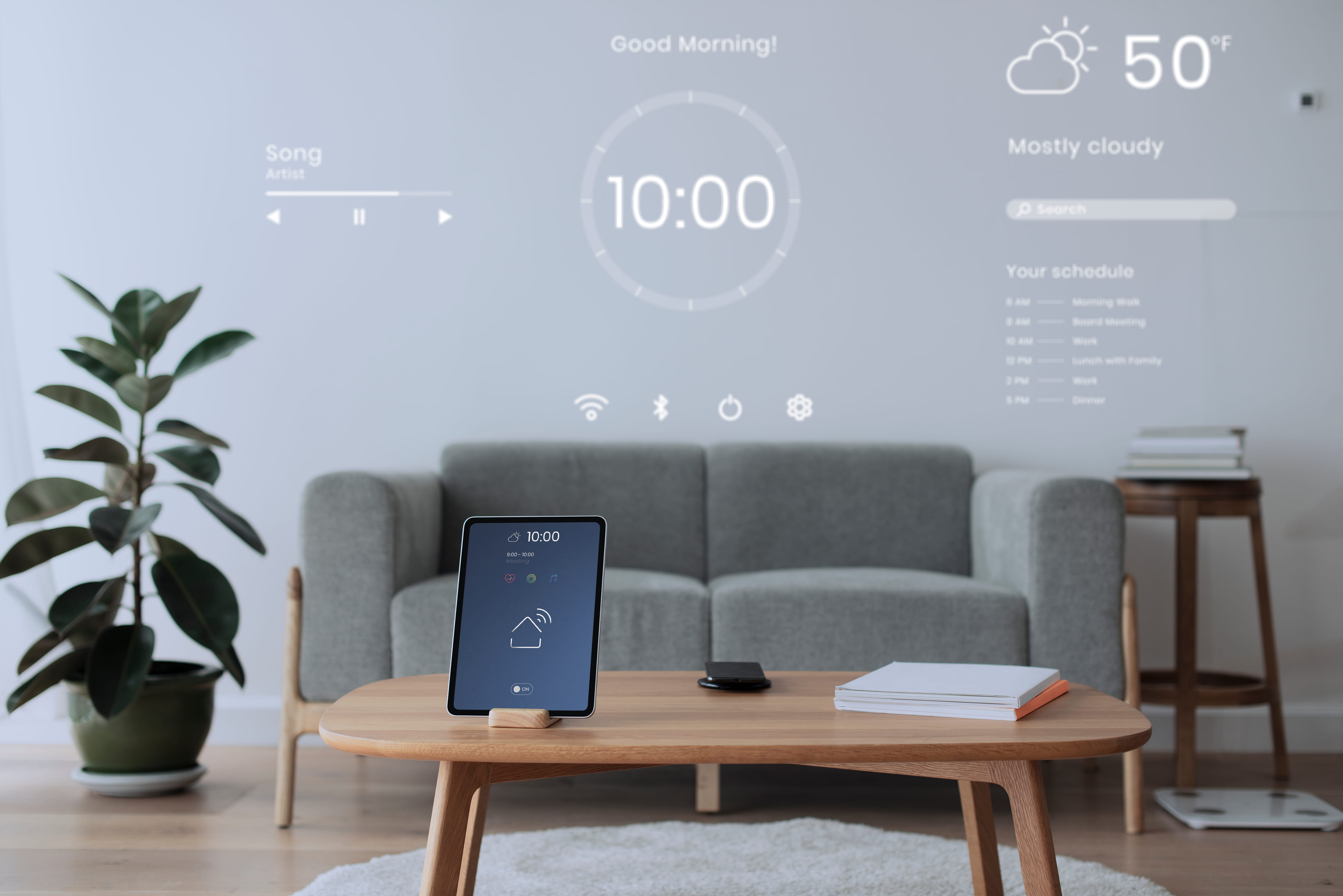
A smart home is a residence equipped with automated devices you can control remotely — through a smartphone, tablet, or voice commands. These devices connect to each other through the internet, commonly referred to as the Internet of Things (IoT), allowing your home to respond to your needs in a more intelligent and coordinated way.
Picture lights that turn on automatically when you arrive home. An air conditioner that is already cool before you walk through the door. A security system you can monitor anytime, from anywhere. That is what a smart home does in practice: it puts convenience, efficiency, and control into a single connected system.
Smart home technology generally falls into five categories. Lighting covers automatic or remote-controlled lamps. Climate handles room temperature through air conditioning or thermostats. Entertainment connects TVs, speakers, and multimedia devices. Security includes CCTV, alarms, door sensors, and access control. Energy management monitors and optimizes electricity usage.
Each category has different value and different investment requirements. That is why building a smart home should follow a deliberate order rather than random purchases. Where you start matters.
Category 1: Security — Start Here
If you can only invest in one category, make it security. This is not just about feeling safe. From a return-on-investment perspective, security systems typically deliver the fastest tangible benefit. You protect your assets, you get early detection when something goes wrong, and you gain daily peace of mind — which, honestly, is hard to put a price on.
What falls under smart security? Smart locks let you open and lock doors through an app, PIN code, or fingerprint. CCTV and security cameras let you watch your home live and store footage in the cloud. Alarm sensors detect motion, open doors or windows, and smoke. And 24/7 monitoring connects your system to a professional control center that can actually respond when an alert triggers.
Here is where an honest distinction matters. DIY security devices — the WiFi cameras you find on online marketplaces — are affordable and easy to set up. They work fine as a supplement. But most of these systems have no follow-up response when an incident actually happens. The camera records. Nobody comes.
A professionally integrated security system works differently. With a provider like SECOM Indonesia, you can monitor your home in real time through your phone, but you also get a direct response from trained personnel when the situation calls for it. The system does not just notify you. It acts.
That is what separates a smart home from a connected home. A connected home lets you watch things happen remotely. A smart home with proper security actually protects you, even when you are not there.
Category 2: Smart Lighting — The Easiest Entry Point
If security is the foundation, lighting is the lowest barrier to entry.
Most people start here because it is affordable and the installation is simple — often no renovation required at all. Swap one or two bulbs for smart versions, and you can already feel the difference. From there, you expand gradually based on what you actually need.
Smart lighting goes beyond on-and-off. It helps create comfort and efficiency throughout your day. Lights that turn on automatically when you arrive home. Lights that dim slowly as bedtime approaches. Lights that follow a schedule so you never walk into a dark house.
The features worth paying attention to include app-based control so you can manage lights from anywhere, automatic scheduling so lights follow your daily routine without manual input, dimming to adjust brightness for different moods and times of day, and voice assistant integration for hands-free control.
Some products also include motion sensors, which means the light activates automatically when it detects movement. This is an interesting crossover feature — it sits at the intersection of comfort, security, and energy savings all at once.
Simple to install, flexible to expand, and the benefit is immediate.
Category 3: Climate Control — A Necessity in Indonesia
In a tropical country like Indonesia, comfortable room temperature is not a luxury. It is a daily requirement. This is where smart climate control earns its place.
With an air conditioner or thermostat connected to an app, you can manage your home's temperature automatically and more efficiently. No more worrying about forgetting to turn off the AC when you leave. No more walking into a stuffy room after being out all day.
What this looks like in practice: the AC turns off automatically when a room is empty. Temperature adjusts based on the time of day — cooler for sleeping, warmer during the afternoon. The system can even start cooling your home before you arrive, so the room is comfortable the moment you step inside.
Beyond comfort, this category has a direct impact on energy savings. AC usage becomes controlled and deliberate rather than wasteful. The result is a home that stays cool without the electricity bill spiraling out of control.
Category 4: Entertainment — Nice to Have, Not Need to Have
This is the category people notice fastest in daily life.
Imagine all your entertainment devices — TV, speakers, home theater — connected and controllable from one app. You can start a movie, adjust the volume, or play your favorite music without juggling multiple remotes. The experience becomes more convenient and more enjoyable, especially during downtime at home.
But from a priority standpoint, smart entertainment ranks lower than the other categories. The reason is straightforward: it contributes almost nothing to asset protection or safety. A smart speaker will not stop a break-in. A connected TV will not alert you to a water leak.
Think of entertainment as the finishing touch. It makes your smart home more enjoyable, but it should not be the starting point. Build your foundation first — security, lighting, climate — then add entertainment once the system that protects your home is already in place.
Category 5: Energy Management — The Long Game
If you want a home that is not just smart but genuinely efficient over time, energy management is where that happens.
Smart energy includes devices like smart plugs that let you control and cut power remotely, power consumption monitors that show real-time electricity usage, and integrated solar panels that maximize alternative energy sources.
Compared to other categories, the upfront investment for smart energy tends to be higher. But the advantage is clear: measurable savings that compound over months and years. You gain visibility into where your electricity actually goes, you can cut waste you did not even know existed, and you gradually build a home that is more efficient and more sustainable.
This is a long-term play, not an instant upgrade. But for homeowners thinking beyond the next electricity bill, it is worth planning into the system from the beginning.

Five Mistakes That Trip Up Smart Home Beginners
Starting a smart home is exciting. But without some planning, you can end up with an expensive system that does not work well, does not work together, or does not actually protect you. Here are the mistakes that come up most often.
The first is starting with what is fun instead of what is important. A smart speaker or a fancy TV is tempting. But without a proper security system in place, everything you buy sits unprotected. Security first, entertainment later.
The second is buying devices that do not work together. Not all smart home products are compatible. Ecosystems like Google Home, Apple HomeKit, and Amazon Alexa do not always integrate smoothly without additional hubs or workarounds. What starts as a minor inconvenience during setup becomes a real headache as you add more devices. Pick an ecosystem early and stick with it.
The third is relying on an unstable internet connection. Smart homes run on WiFi. If your home network is unreliable or does not cover every room, your devices will lag, disconnect, or simply fail to respond. Before spending money on smart devices, make sure your network is solid and covers the entire house.
The fourth is ignoring cybersecurity for IoT devices. Every device connected to the internet is a potential entry point for attackers. This is often treated as an afterthought. Basic steps go a long way: use strong, unique passwords for every device, keep your IoT network separate from your main network, and choose vendors that regularly release security updates.
The fifth is assuming DIY is always cheaper, especially for security. DIY cameras and alarms look more affordable upfront. But without active monitoring or a clear response protocol, these devices mostly function as recordings after something has already happened. They do not prevent incidents. For something as consequential as home security, consider whether you want a system that watches or a system that responds.
Avoiding these mistakes means building a smart home that actually works — one that is effective, secure, and delivers real value over time instead of collecting dust in a drawer.
Security Is the Foundation, Not an Accessory
Out of all five smart home categories, security is the one you cannot compromise on.
A light that stops working can be replaced. An AC unit that breaks down can be repaired. But an incident that a proper security system could have prevented? That cannot be undone.
Security is not a nice-to-have addition to a smart home. It is the base layer everything else sits on.
This is where approach matters as much as technology. The Man-Machine philosophy that SECOM applies treats security not as a collection of gadgets but as a living, integrated system. Advanced technology works alongside trained personnel, not in isolation. The camera sees. The sensor detects. And when it matters, a real person responds.
That is what a smart home should deliver at its core: full control, from anywhere, without compromise — especially for the things that matter most.
Talk to SECOM Indonesia about building security into your smart home from day one.