


SECOM’s Vision: To Make “ANSHIN” a Global Language
SECOM Co., Ltd., the Japanese parent company behind SECOM's security network across 14 countries and territories (18 counting the full group), finalized its Group Vision 2040 on May 12, 2026. It's the second long-term roadmap of its kind, following Vision 2030, which came out back in 2017. The core idea is simple even though the ambition behind it isn't: shift security from reactive to proactive, and do it by doubling down on something SECOM has spent more than six decades building. Anshin.
For anyone unfamiliar, "Anshin" (安心) is Japanese for a state of calm, free from worry. SECOM has used the word since Vision 2030 as the name of its service platform. What's new in Vision 2040 is the scale of ambition attached to it. SECOM wants Anshin to stop being just a product name and become a security philosophy recognized across borders, following the same path as other Japanese words that entered global vocabulary without translation. "Kaizen" in manufacturing. "Sushi" on restaurant menus everywhere.
What's Actually in SECOM Group Vision 2040?
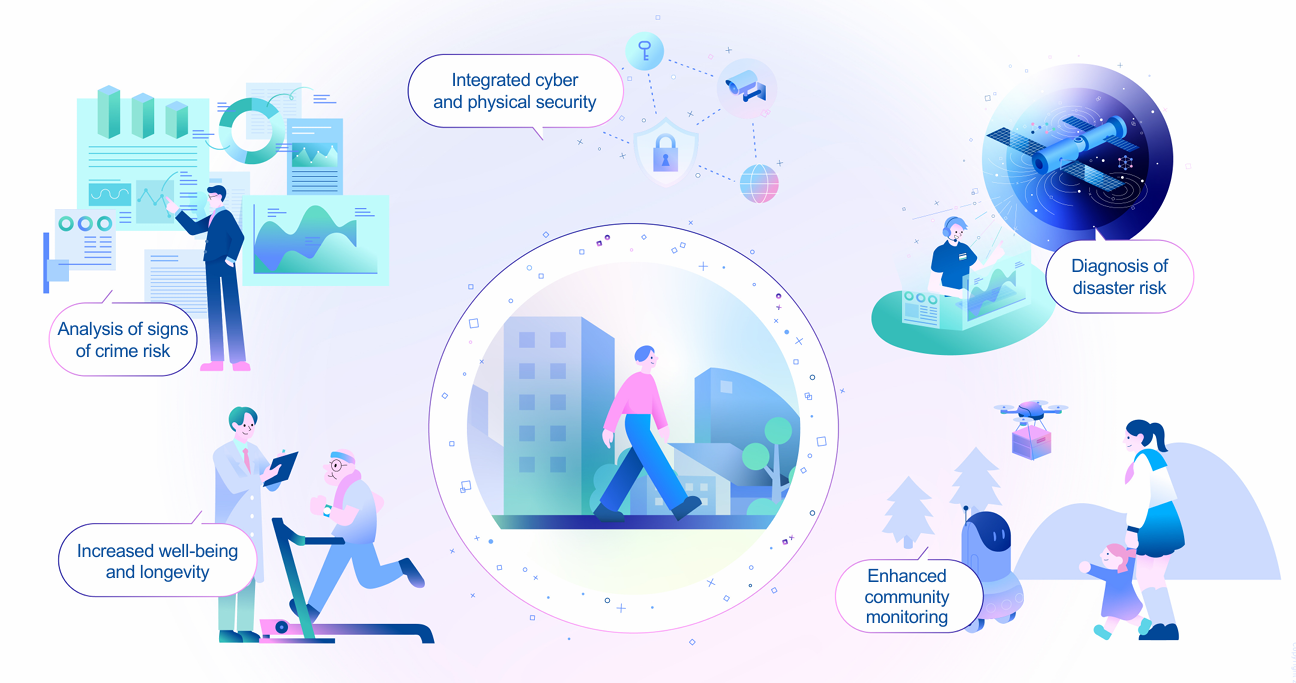
The vision centers on a concept SECOM calls Peace of Mind through Anticipation, a calm that comes from spotting risk signals early rather than responding after something has already happened. To get there, SECOM Co., Ltd. plans to expand the Anshin Platform. This is trust-based infrastructure, built with outside partners, that pulls in data, technology, and operational know-how from multiple stakeholders instead of keeping everything in-house.
Three things stand out in the vision.
Reactive becomes proactive. Security systems are no longer built to wait for an incident. They're designed to recognize risk patterns before one happens.
The Anshin Platform is the foundation, not a fresh start. This isn't a new platform built from scratch. It continues what began with Vision 2030, now widened through partnerships with outside technology and data providers.
Human skill and technology go deeper together. SECOM is explicit that its edge comes from combining trained people with advanced technology, not from picking one over the other.
That third point should sound familiar to anyone who follows SECOM Indonesia. It's essentially the Man-Machine philosophy the local operation has run on for years.
Why Push "Anshin" as a Global Word?
This isn't just branding. It's a bet on vocabulary. A handful of Japanese words already travel the world without translation. American and European factories use "Kaizen." Nobody orders a "raw fish roll." They order sushi. SECOM wants Anshin to land the same way: understood everywhere as a standard for feeling safe, not filed away as a trademark.
And it's not just talk. SECOM runs a program called the SECOM Anshin Innovation Challenge, a collaboration with startups in multiple countries built to spread the Anshin concept through joint work rather than one-way branch expansion. The goal is for Anshin to grow as a cross-industry movement, not stay confined to SECOM's own business lines.
Where Does SECOM Indonesia Fit?
SECOM Indonesia operates through two entities: PT SECOM Indonesia, which handles monitoring and response, and PT SECOM Bhayangkara, which covers security guard services. The group has been active in the country for more than 30 years, headquartered in Jakarta with branches in Surabaya and Deltamas, plus a training center in Ciawi.
Here's what's interesting. The philosophy Vision 2040 just formalized has already been running on the ground in Indonesia through the Man-Machine approach: trained security personnel paired with electronic systems, never one without the other.
A few concrete overlaps between the global direction and daily practice in Indonesia:
Control Center. SECOM Indonesia runs a Control Center that monitors client systems in real time. It's the early version of the proactive approach the group is now formalizing worldwide.
Certifications and technology partnerships. ISO 9001:2015 and ISO 45001:2018 certifications, plus partnerships with brands like Dahua and Genetec, are the local version of what Vision 2040 calls integrating data and technology from multiple partners.
Same foundation since 2017. Vision 2030 introduced the Anshin Platform as a concept back then. SECOM Indonesia has been operating on that same track since, not scrambling now to catch up with the group's new direction.
For businesses in manufacturing, banking, hospitality, retail, or industrial estates, none of this is internal corporate trivia. It signals that SECOM Indonesia's technology and personnel training investments already have a roadmap stretching to 2040. That's not a short-term reaction to a trend.
What Does This Mean for Businesses in Indonesia?
The shift from reactive to proactive isn't an abstract phrase. In practice, it means security systems built to catch anomalies before they turn into incidents: unusual access patterns, movement outside operating hours, weak points in infrastructure that have never actually been tested. For businesses managing large physical assets, like factories or distribution centers, this bears directly on risk-cost efficiency. It isn't only about responding faster once something has already gone wrong.
The direction also signals where SECOM's long-term investment is heading. More toward data integration and cross-partner collaboration, less toward simply adding more CCTV units or security guards. If you're evaluating a security vendor right now, that's worth asking about directly. Does your security partner have a technology roadmap for the next five to ten years, or are they just selling what's already on the shelf?
Curious how the Man-Machine approach and the Anshin Platform could apply to your own operations? SECOM Indonesia's team is open to that conversation.